
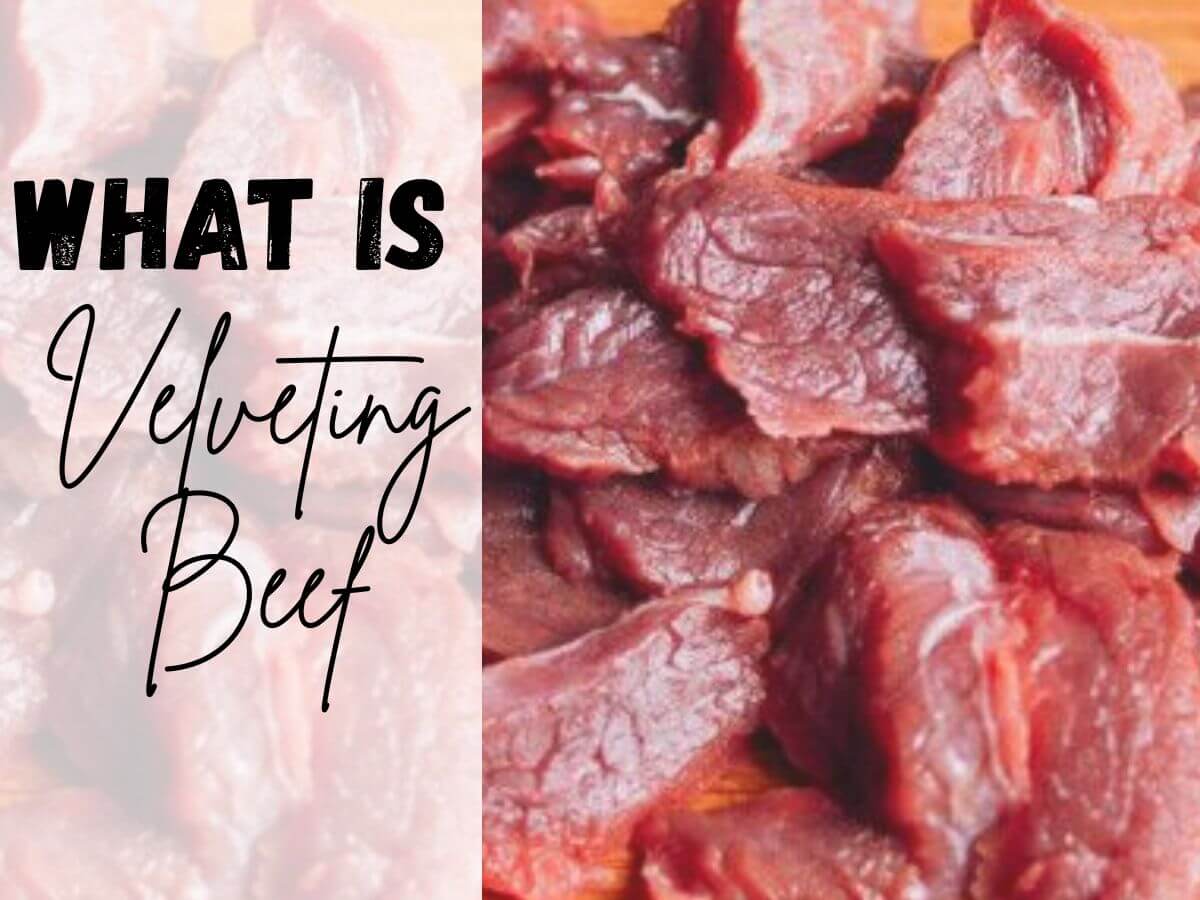
Have you ever ordered a beef stir-fry at a Chinese restaurant and wondered why the meat is so impossibly tender almost silky against your tongue while the same dish you make at home ends up chewy and tough? The answer is not a magic ingredient or years of professional training. It is a simple, centuries-old Chinese technique called velveting beef.
Velveting is a method of pre-treating raw meat before cooking. It involves coating the beef in a mixture of ingredients that break down muscle fibers, lock in moisture, and create a protective barrier around the meat. The result is beef that stays juicy, slides smoothly through stir-fries, and delivers that unmistakable restaurant-quality texture that most home cooks have been chasing for years.
“Velveting is not just a recipe step it is a philosophy. It is the Chinese kitchen’s way of respecting the meat and coaxing out its best possible version.”
Whether you use cornstarch, baking soda, egg whites, or a combination of all three, velveting transforms economical, tougher cuts of beef into something that rivals expensive steak in texture. In this guide, you will learn exactly what velveting is, how to do it properly using different methods, how to apply it to various recipes, and when it is and is not the right technique for the job.
What Is Velveting Beef?
Velveting beef is a Chinese cooking technique in which raw beef is marinated in a tenderizing mixture and then briefly cooked either by blanching in water, poaching in oil, or quickly stir-frying before being added to the final dish. The name comes from the velvety, soft texture the technique produces in the finished meat.
Traditionally, this technique was developed in Chinese restaurant kitchens where high-volume cooking required chefs to work quickly without sacrificing texture. By pre-cooking the beef in a controlled environment before the main stir-fry, cooks could ensure perfectly tender results every single time even under intense heat and pressure.
The technique works because of a combination of chemical and physical reactions:
- Alkaline agents (like baking soda) raise the pH of the meat’s surface, preventing proteins from bonding tightly when heat is applied which keeps the meat tender instead of tough.
- Starches (like cornstarch) form a thin, protective coating around each strip of beef that seals in moisture during cooking.
- Egg whites add another layer of protein coating that contributes to the silky texture.
- Oil or water blanching as a pre-cook step gently sets the outside of the meat before it hits the screaming-hot wok, so the final cook is fast and even.
When beef is cooked at high heat without any treatment, its muscle proteins tighten and squeeze out moisture rapidly this is why pan-fried beef can turn dry and chewy. Velveting slows and controls this process by chemically relaxing the protein structure before cooking and physically sealing the meat’s surface. The result is beef that stays moist even when stir-fried at 400°F+.
Velveting Techniques:
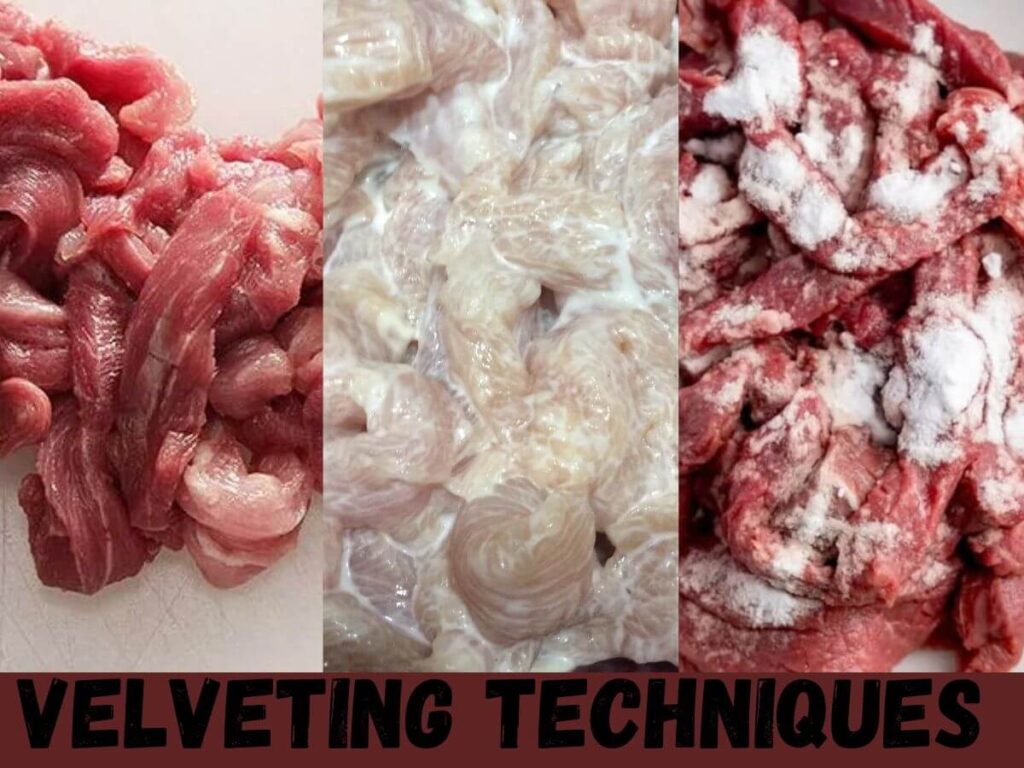
There is no single right way to velvet beef. Different cooks, regions, and recipes favor different approaches. Here are the main techniques explained in detail:
The Baking Soda Method
This is the quickest and most beginner-friendly approach. Baking soda (sodium bicarbonate) is an alkaline compound that raises the pH on the surface of the beef. This alkaline environment prevents the proteins from contracting too tightly during cooking, which directly results in more tender meat.
How to Do It:
- Slice the beef thinly against the grain (about ¼ inch thick strips).
- Sprinkle ¾ teaspoon of baking soda per 500g (1 lb) of beef.
- Toss to coat evenly and let it sit for 15–20 minutes at room temperature. Do not exceed 30 minutes or the meat can develop an unpleasant, chalky flavor.
- Rinse the beef thoroughly under cold water to remove the baking soda. Pat dry.
- Proceed with your recipe’s marinade or cook directly.
Key tip: Always rinse after baking soda treatment. Unlike the cornstarch method, leaving baking soda residue on the meat will ruin the flavor of your dish with a soapy, bitter aftertaste.
The Cornstarch Method
This is the most traditional Chinese velveting method and it focuses more on texture and moisture retention than chemical tenderization. Cornstarch creates a slippery, protective coating on each piece of beef that shields the meat from direct heat during a quick stir-fry.
How to Do It:
- Slice beef thinly against the grain.
- Combine the beef with 1 tablespoon cornstarch, 1 tablespoon soy sauce, 1 teaspoon sesame oil, and 1 teaspoon neutral oil per 500g beef.
- Mix well and marinate for 30 minutes to 1 hour in the refrigerator.
- Cook directly in your recipe no rinsing required.
This method gives the beef a slightly glossy, silky appearance in the finished dish and helps the sauce cling beautifully to each piece.
Cornstarch + Baking Soda Combined Method
This is the technique used by many professional Chinese cooks and the most effective approach for maximizing both tenderness and texture. You get the tenderizing chemical action of baking soda plus the moisture-locking, texture-enhancing benefit of cornstarch.
Standard Ratio per 500g Beef:
- ½ teaspoon baking soda
- 1 tablespoon cornstarch
- 1 tablespoon soy sauce
- 1 tablespoon Shaoxing wine or dry sherry
- 1 teaspoon neutral oil
Mix, marinate for 30 minutes, then either rinse lightly (if you used more than ½ tsp baking soda) or cook directly.
Egg White Velveting Method
A classic Cantonese approach that uses egg whites as the primary coating agent. Egg whites are high in protein and create a particularly silky, almost translucent coating on the beef that is most noticeable in dishes where the meat is served in a lighter sauce.
How to Do It:
- Whisk 1 egg white until frothy (not stiff peaks).
- Toss with sliced beef, 1 tablespoon cornstarch, and a pinch of salt.
- Let rest for 30 minutes in the fridge.
- Cook using the water or oil blanching method (described below).
Water Velveting (Blanching Method)
Water velveting beef is a technique where marinated beef is dropped into a pot of barely simmering water (around 160–180°F just below a boil) for 30–60 seconds before being added to the wok. This gentle pre-cook sets the outside of the meat so that the final stir-fry only needs to develop flavor, not cook the beef from raw.
How to Do It:
- Bring a pot of water to around 170°F you want small bubbles, not a rolling boil.
- Add a splash of oil to the water (this helps prevent sticking).
- Add the marinated beef in small batches. Stir gently to separate pieces.
- Cook for 30–45 seconds until the beef just turns from red to pale pink on the outside. It should still be barely cooked through.
- Remove immediately with a slotted spoon. Drain well.
- Proceed with your stir-fry recipe, adding the beef at the very end.
Water velveting is the preferred method when cooking for a crowd or making healthier dishes, since it uses no oil in the pre-cook step. It is also the approach highlighted by popular food writers including the widely-cited dimsimlim velveting beef guide which made this technique accessible to English-speaking home cooks.
Oil Velveting
The restaurant standard. Marinated beef is submerged in oil heated to about 250–275°F (cool enough that the meat poaches rather than fries) for 30–45 seconds. This method produces an exceptionally silky texture because the oil cooks the meat gently and evenly from all sides simultaneously. However, it requires a large quantity of oil and more careful temperature control.
Expert Tips and Tricks for Perfect Velveted Beef
Always Slice Against the Grain
The direction you cut the beef matters enormously. Look at the beef and identify which way the muscle fibers (the grain) run, then cut perpendicular to those fibers. This shortens the fibers and prevents the meat from being chewy no matter how well you velvet it.
Keep Slices Uniform in Thickness
Inconsistent slice thickness means some pieces will be overcooked while others are still underdone. Aim for ¼ inch (6mm) slices. Partially freezing the beef for 20–30 minutes before slicing makes this much easier.
Do Not Over-Marinate with Baking Soda
More time does not mean more tenderness when baking soda is involved. Over 30 minutes and the texture becomes mushy and the flavor takes on an unpleasant chemical quality. Fifteen to twenty minutes is the sweet spot.
Temperature of Water Matters in Blanching
When water velveting, if the water is boiling vigorously, the turbulence will tear up your delicate marinated beef. Keep it at a gentle simmer think spa water, not hot tub.
Pat Dry After Rinsing
If you are using the baking soda method and rinsing, make sure to pat the beef thoroughly dry before cooking. Excess moisture will cause steaming instead of searing in the wok, which ruins both texture and flavor development.
Use the Right Cut
Flank steak, sirloin, skirt steak, and even budget-friendly chuck are all excellent candidates for velveting. More tender cuts like tenderloin do not benefit as dramatically save the technique for cuts that need the help.
Add Oil to Your Marinade
A small amount of neutral oil in the marinade helps the beef separate easily during cooking and prevents clumping in both water and oil blanching.
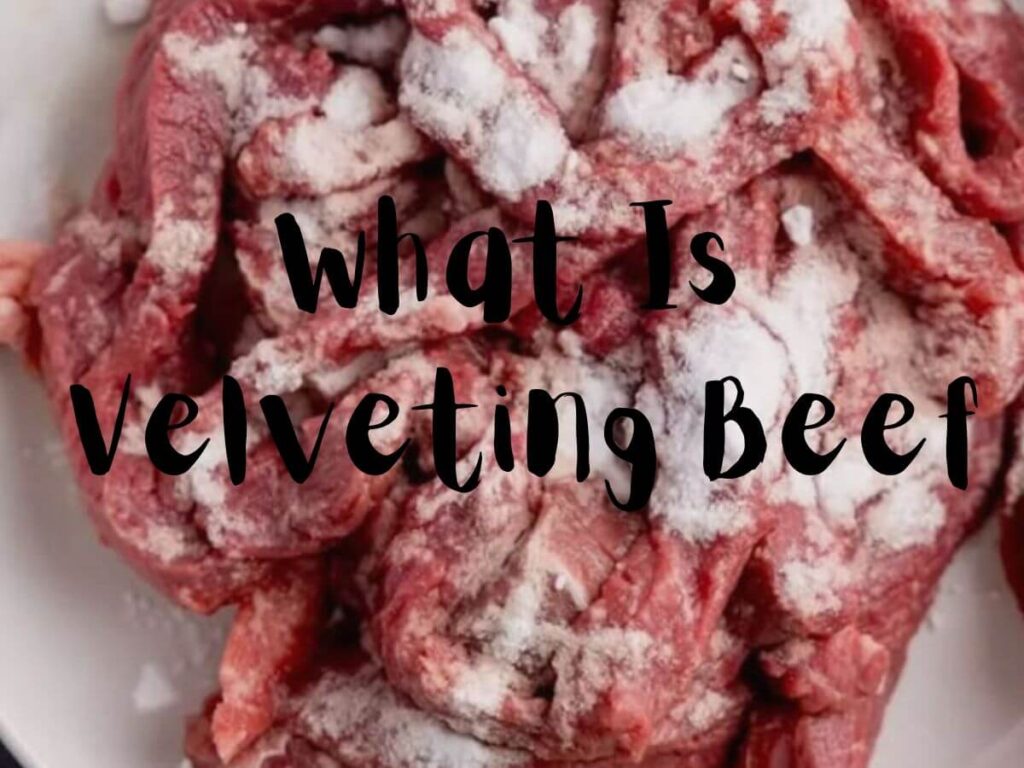
Velveted Beef in Different Recipes and Techniques
Classic Chinese Beef and Broccoli (Cornstarch + Baking Soda Method)
Best for: Everyday weeknight stir-fries | Technique: Water blanching
Ingredients (serves 4):
- 500g flank steak, sliced thin against the grain
- Marinade: ½ tsp baking soda, 1 tbsp cornstarch, 1 tbsp soy sauce, 1 tsp sesame oil, 1 tbsp Shaoxing wine
- 300g broccoli florets, 3 cloves garlic, 1-inch ginger piece
- Sauce: 3 tbsp oyster sauce, 2 tbsp soy sauce, 1 tsp sugar, ½ cup beef broth
Method:
Mix marinade with beef and rest 20 minutes. Blanch in barely simmering water 40 seconds, drain. In a hot wok with 2 tbsp oil, cook garlic and ginger 30 seconds, add broccoli 2 minutes, add sauce and reduce slightly, add drained beef and toss 1 minute. Serve immediately over steamed rice.
Beef and Black Bean Sauce (Egg White + Cornstarch Method)
Best for: Cantonese-style restaurant dishes | Technique: Oil velveting
This dish showcases how egg white velveting produces an exceptionally pale, silky beef that contrasts beautifully with the deep, savory black bean sauce. Velvet 400g beef sirloin with 1 egg white, 2 tsp cornstarch, and a pinch of salt for 30 minutes. Oil velvet at 275°F for 35 seconds. Build your black bean sauce separately (fermented black beans, garlic, ginger, soy, sugar, stock), then toss the pre-cooked beef through at the finish.
Velveting Steak for Grilling
Best for: Flat cuts like skirt or flank steak | Technique: Baking soda rub, no blanching
Velveting steak for grilling is a slightly different application. Instead of blanching, you use only the baking soda tenderizing step (15 minutes, then rinse and dry thoroughly) and skip the water or oil pre-cook entirely. The result is a steak with a more relaxed protein structure that grills up with noticeably less chewiness. After rinsing, season with salt, pepper, and your chosen marinade, then grill over high heat. This works especially well for taco-style preparations with skirt or flank steak.
Mongolian Beef (Combined Method)
Best for: Bold, saucy restaurant-style dishes | Technique: Direct wok method
Velvet 500g flank steak with the combined baking soda and cornstarch method for 25 minutes. Instead of blanching, dredge the marinated beef in additional dry cornstarch and fry in hot oil in batches until lightly crisp on the outside. Remove, make your sauce (garlic, ginger, dark soy sauce, brown sugar, water) in the same pan, then add beef back and toss to coat. The cornstarch crust absorbs the sauce and creates a sticky, glossy coating.
What Is Velveting Beef: Cornstarch vs Baking Soda
This is one of the most common questions home cooks ask, and the answer depends entirely on what you are trying to achieve in the dish.
| Factor | Cornstarch | Baking Soda | Combined |
|---|---|---|---|
| Primary Effect | Moisture retention, silky coating | Chemical tenderization | Both effects together |
| Marination Time | 30 min – 1 hour | 15–20 minutes | 20–30 minutes |
| Rinsing Required? | No | Yes essential | Light rinse if over ½ tsp |
| Texture Result | Silky, glossy | Tender, slightly softer | Maximum silky-tender |
| Flavor Impact | Neutral | Can be chalky if overused | Neutral when balanced |
| Best For | Light sauces, clear broths | Quick prep, tough cuts | Most stir-fry dishes |
| Risk if Wrong | Gummy texture if too much | Soapy flavor, mushy texture | Low most forgiving |
Verdict: For most home cooks making Chinese stir-fries, the combined method is the best starting point. If you are short on time, the baking soda method alone works in just 15 minutes. If you prefer to keep things simple and flavorful without rinsing, the cornstarch-only method is perfectly respectable and widely used.
Pros and Cons of Velveting Beef
Pros
- Transforms tough, cheap cuts into restaurant-quality texture
- Works in as little as 15 minutes with the baking soda method
- Prevents the beef from drying out during high-heat stir-frying
- Creates the authentic Chinese restaurant experience at home
- Very versatile works with multiple cuts and recipes
- No special equipment needed
- Water blanching method is low-fat and healthy
- Makes economical beef cuts just as enjoyable as premium cuts
Cons
- Adds extra steps and time to the cooking process
- Baking soda can ruin a dish if overused or not rinsed
- Oil velveting requires a large amount of oil
- Not ideal for dishes where a seared, caramelized crust is desired
- Egg white method can be fussy to get right
- Over-marinating can produce an unpleasantly mushy texture
- Not suitable for thick cuts or whole steaks designed for thin slices
Velveting vs Other Tenderizing Techniques
Velveting is not the only way to tenderize beef. Here is how it compares to other popular methods:
Velveting vs Mechanical Tenderizing
Mechanical tenderizing uses a mallet or jaccard tool to physically break down muscle fibers. It works well for thicker cuts destined for grilling or pan-searing, but it changes the structural integrity of the meat and can lead to uneven cooking. Velveting, by contrast, preserves the shape and structure of each piece while tenderizing chemically from within making it far superior for stir-fry applications.
Velveting vs Acidic Marinades
Acid-based marinades (lemon juice, vinegar, yogurt) denature proteins at the surface of the meat but can turn the exterior mushy and the interior still tough if used too long. Velveting with baking soda is faster (15–20 minutes vs several hours) and produces more consistent results through the full slice of meat.
Velveting vs Dry Brining
Dry brining (salting meat and letting it rest in the fridge for several hours) is excellent for whole steaks and roasts because it draws out then reabsorbs moisture, deeply seasoning the meat. For thin-sliced stir-fry beef, however, velveting produces better results in a fraction of the time.
Velveting vs Enzyme-Based Tenderizers
Commercial meat tenderizers containing papain (from papaya) or bromelain (from pineapple) can tenderize beef but often produce an unpleasant, slightly mushy texture throughout the meat. Velveting gives you control over exactly how much tenderization you want and produces a far more pleasant, uniform texture.
| Technique | Time Required | Best Application | Texture Result |
|---|---|---|---|
| Velveting | 15–60 min | Stir-fries, thin slices | Silky, very tender |
| Mechanical Tenderizing | 5 min | Thick steaks, grilling | Softer but altered structure |
| Acidic Marinade | 2–12 hours | Grilling, roasting | Tender surface, variable center |
| Dry Brine | 1–24 hours | Whole steaks, roasts | Juicy, deeply seasoned |
| Enzyme Tenderizer | 30 min – 2 hours | Various | Tender but can be mushy |
Frequently Asked Questions
What is velveting beef technique in cooking?
Velveting is a Chinese technique where thinly sliced raw meat is coated in a tenderizing mixture typically containing baking soda, cornstarch, egg whites, or a combination and then either marinated and cooked directly or pre-cooked briefly in water or oil before being added to a stir-fry. The technique produces meat that is silky, tender, and juicy rather than tough and chewy.
How do you velvetize beef at home?
The simplest home method is to mix ½ teaspoon of baking soda and 1 tablespoon of cornstarch with 500g of thinly sliced beef, add a tablespoon of soy sauce and a teaspoon of oil, and marinate for 20–30 minutes. Rinse lightly, pat dry, and stir-fry. You can also skip rinsing by using only the cornstarch method without baking soda if you prefer.
Do you use cornstarch or baking soda for velveting beef?
Both work, but they do different things. Baking soda tenderizes the meat chemically by raising its pH, while cornstarch creates a silky coating that locks in moisture. The best approach for most dishes is to use both together in small amounts. If you only have one available, baking soda alone will give you noticeably more tender meat, while cornstarch alone will give you better texture and moisture retention.
Do you have to rinse meat after velveting?
It depends on the method. If you used baking soda, yes always rinse thoroughly before cooking. Leaving baking soda on the meat will give your dish a soapy, bitter flavor. If you used only cornstarch (without baking soda), there is no need to rinse. The cornstarch mixture goes directly into the wok and helps the sauce cling to the beef.
what is velveting beef in Chinese style?
Classic Chinese-style velveting involves a combination marinade of baking soda, cornstarch, soy sauce, Shaoxing rice wine, and a small amount of oil. After marinating for 20–30 minutes, the beef is either blanched briefly in barely simmering water (water velveting) or pre-cooked in oil at low temperature (oil velveting) before being stir-fried quickly in a hot wok with the remaining ingredients and sauce.
What is velveting beef with water?
Water velveting is a healthier alternative to oil velveting where the marinated beef is briefly blanched in water heated to around 160–180°F (just below a simmer) for 30–45 seconds. This gently sets the outside of the meat without adding any extra fat. It is popular in home Chinese cooking and health-conscious restaurant kitchens, and produces very similar results to oil velveting.
How do you velvet beef with baking soda step by step?
Slice the beef thinly against the grain. Sprinkle ¾ teaspoon of baking soda over 500g of beef and toss to coat evenly. Leave at room temperature for 15–20 minutes. Rinse well under cold water, making sure all baking soda is removed. Pat dry with paper towels. Add your preferred marinade ingredients and cook as directed in your recipe. Do not leave the baking soda on the meat for longer than 30 minutes or the texture will become mushy.
Can you velvet steak for grilling?
Yes, but with a modified approach. Use only the baking soda tenderizing step no blanching. Apply baking soda, rest 15–20 minutes, rinse thoroughly, pat completely dry, then season and grill over high heat. This works best with flat cuts like flank steak and skirt steak. The baking soda treatment will noticeably reduce chewiness without affecting the steak’s ability to develop a good sear and grill marks.
Does velveting change the flavor of the beef?
When done correctly, velveting should not negatively change the flavor of the beef. The cornstarch is flavorless and the baking soda, if rinsed properly, leaves no trace of flavor. The soy sauce, wine, and other marinade components actually enhance the flavor. The most noticeable change is entirely textural the beef becomes significantly more tender and moist.
How long does velveted beef last in the fridge?
Beef that has been velveted with the baking soda method should be cooked within 30 minutes of finishing the marination and rinsing step do not store it marinated with baking soda. Beef marinated with the cornstarch-only or combined method can be stored covered in the refrigerator for up to 24 hours before cooking. Beyond that, the texture may begin to deteriorate.
Conclusion
Velveting beef is one of those techniques that, once you learn it, quietly becomes a permanent part of how you cook. It is not complicated. It does not require expensive ingredients or professional equipment. It simply requires understanding why the technique works and being willing to add a single extra step to your stir-fry routine.
Whether you choose the quick baking soda method for a fast weeknight dinner, the traditional cornstarch approach for authentic Chinese flavor, or the full combined treatment for maximum silky tenderness, the results will consistently surprise you. Even the most budget-friendly cut of beef a tough piece of chuck, a skirt steak, a flank can emerge from this treatment tasting like something served in a proper Chinese restaurant.
The key things to remember are these: slice against the grain, do not over-marinate, rinse thoroughly if you use baking soda, and keep your water blanch temperature gentle. Follow those four rules and you will have mastered the foundation of Chinese beef cookery that has been the restaurant kitchen’s best-kept secret for generations.
Start with the combined method for your next beef stir-fry and judge the difference yourself. Once you taste the result, you will never go back to cooking beef without velveting it first.