

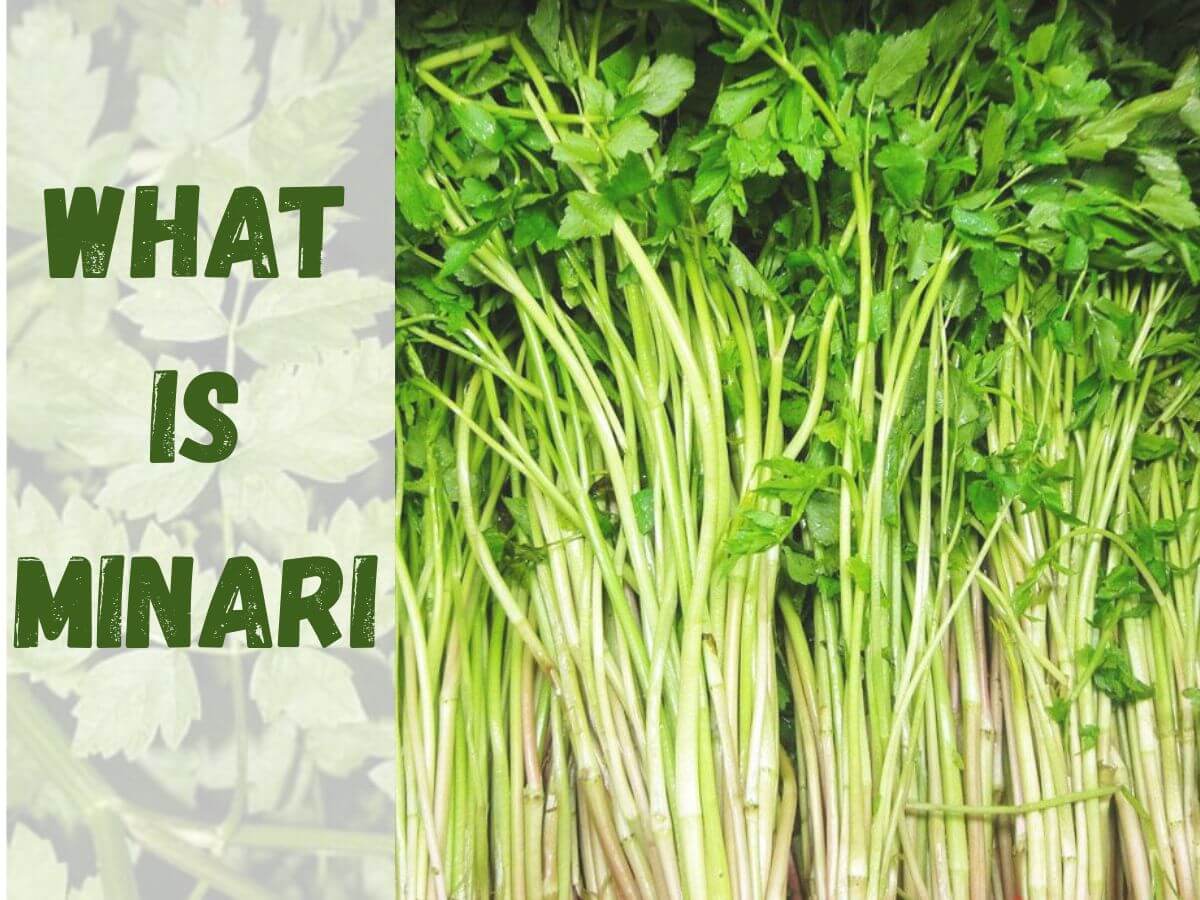
If you’ve seen the 2020 Oscar-nominated film Minari, you might have wondered, what is minari that the grandmother lovingly plants by a creek in rural Arkansas? Well, let me tell you, the answer is far more interesting than you’d expect.
Minari (미나리) is the Korean name for a semi-aquatic herb that has been growing in East Asia for thousands of years. It belongs to the scientific family known as Oenanthe javanica and is commonly called water dropwort in English. But you might also see it labeled as water celery, water parsley, Java waterdropwort, or even Korean watercress depending on where you shop. In Chinese-speaking communities, it goes by 水芹 (shuǐ qín), which literally means “water celery.”
In Korea, minari is not just a vegetable, it is a cultural symbol. For centuries, it has represented loyalty, humility, and resilience. During the Joseon dynasty, minari kimchi was specifically placed on royal banquet tables during ancestral rites. The phrase “harvesting minari” was even used to describe the act of studying at Sungkyunkwan, Korea’s most prestigious ancient academy. That is how deeply embedded this humble green is in Korean identity.
“Minari grows anywhere there is water. It doesn’t ask for much, and yet it gives back everything.”
Today, minari is used across Korea in soups, stews, pancakes, salads, kimchi, and grilled dishes. It has also been gaining attention globally thanks to the film and a growing interest in Korean food culture. So if you have been curious about what minari actually is, where it comes from, what it tastes like, and how to cook with it you are in exactly the right place.
overview:
| English Name | Water Dropwort / Water Celery |
| Korean Name | 미나리 (Minari) |
| Chinese Name | 水芹 (Shuǐ Qín) |
| Scientific Name | Oenanthe javanica |
| Origin | East & Tropical Asia |
| Best Season | Spring (March – April) |
The Minari Plant, What Does It Look Like?
The minari plant is a leafy, semi-aquatic perennial herb that grows best in marshy areas, alongside riverbanks, or in any soil that has plenty of moisture. It thrives in shallow water, which is why it has picked up names like water celery and water dropwort.
Physically, minari has long, hollow stems that can grow anywhere from 50 to 100 centimeters in length. The stems are smooth, thin, and a vivid bright green though some varieties have purple-tipped stems, which makes them particularly striking in a bunch. The leaves grow alternately along the stem and are small and oval-shaped with lightly serrated edges.
All parts of the plant are edible the leaves, stems, and even flowers. However, most Korean recipes focus on the stems because that is where the flavor is most concentrated, much like cilantro or parsley. The roots are generally not consumed.
One very important thing to keep in mind: minari has poisonous lookalikes in the wild. The hemlock water dropwort (Oenanthe crocata) closely resembles minari but is extremely toxic and can be fatal. This is why it is always safer to purchase minari from a verified Korean grocery store rather than foraging for it in the wild.
The minari plant is a perennial, which means it comes back year after year. Its ideal growing temperature sits between 68°F and 77°F (20°C to 25°C) during the day and cooler at night. It does not handle extreme cold or heat well, which is why spring is considered its prime season in Korea.
How to Grow Minari from Seeds
If you are interested in growing your own minari at home, the good news is that it is not a complicated plant to grow. Minari seeds are sometimes available at Korean grocery stores or online Asian plant suppliers. The plant is very easy to root even a stem cutting placed in water will begin to sprout roots within a week or two.
Plant minari in moist, marshy soil with good water retention. A pot placed in a shallow tray of water works wonderfully. Keep it in partial shade, make sure the soil never dries out, and you should see it thriving. Once established, minari grows aggressively and will produce abundantly for multiple seasons.
How Does Minari Taste?
This is one of the most common questions people ask before trying minari for the first time. The honest answer is that minari has a taste unlike any single Western herb, but the closest comparison would be a cross between celery, parsley, and carrot tops with a little bit of grassiness and a gentle peppery bite.
The flavor is fresh, herbal, and slightly bitter. There is a clean, almost minty freshness to it that makes it excellent for cutting through heavy or fatty dishes. When raw, the texture is crisp and crunchy, similar to tender celery stalks. When cooked, it softens but keeps its distinctive herbal fragrance remarkably well.
Minari does not overpower a dish it elevates it. Think of it as the green note that makes everything else taste brighter and cleaner.
Many people ask: is minari the same as watercress? The short answer is no. While both grow near water and are used in similar ways, their flavors are quite different. Watercress has a much more peppery and sharp taste, while minari is gentler, more herbal, and has a fresher aroma. They also come from completely different plant families. Watercress can work as a substitute in a pinch, but the experience will not be the same.
What Is Minari Good For? Uses in Korean Cuisine
In Korean cooking, minari is treated more like a vegetable than a garnish herb. It shows up in a wide range of dishes and plays many different roles sometimes it is the star, sometimes it is the supporting act that makes everything else taste better.
Soups and Stews
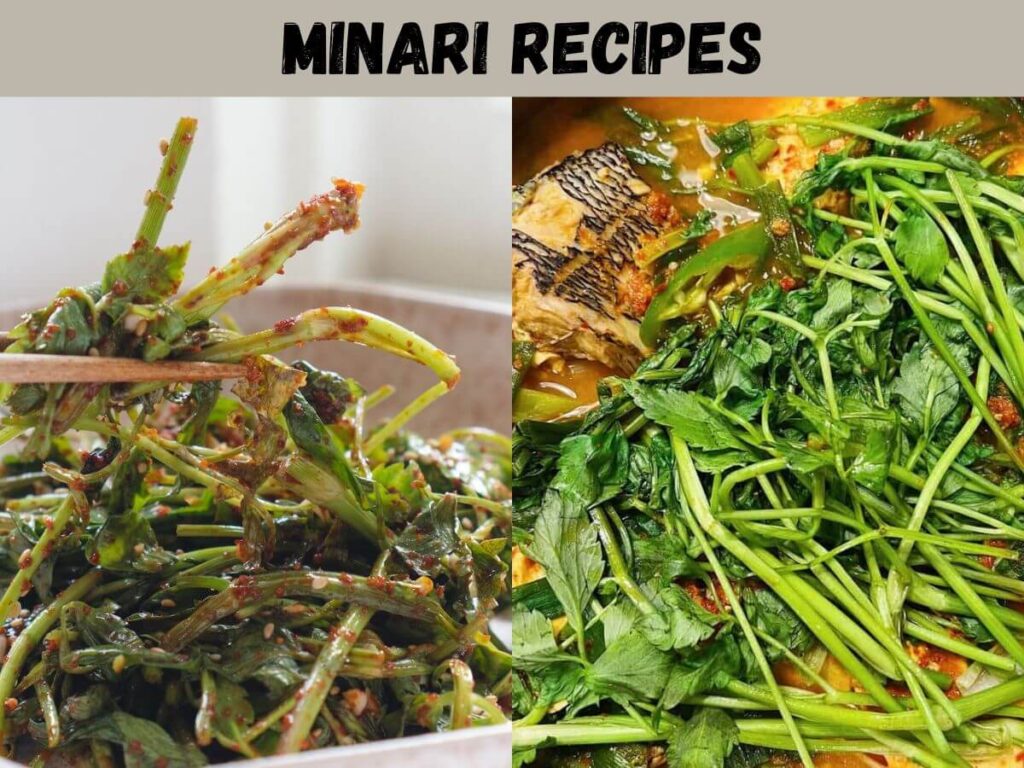
Minari is one of the most popular additions to Korean fish soups and seafood stews. Its fresh herbal fragrance naturally neutralizes any fishy smell, which makes it an ideal companion for dishes like maeuntang (spicy fish stew) and haemul jeongol (seafood hot pot). The leafy tops are added as a garnish at the end, while the stems are cooked directly into the broth.
Korean BBQ and Grilled Dishes
Minari pairs beautifully with fatty, rich proteins like pork belly. During Korean BBQ, minari can be placed on the grill beside the meat, where it absorbs the meat juices and fat and transforms into something wonderfully savory. It is also commonly used in ssam, where you wrap grilled meat in a leafy green.
Kimchi
Before cabbage became the dominant kimchi ingredient in Korea, minari was one of the primary vegetables used in kimchi-making. Even today, minari is added to napa cabbage kimchi because it holds up well during fermentation and gives the kimchi a fresh, herbaceous quality that cabbage alone cannot provide.
Namul (Seasoned Vegetable Dishes)
Namul refers to a broad category of Korean side dishes made by seasoning blanched or raw vegetables with oil, soy sauce, garlic, sesame, and other condiments. Minari namul is a classic spring side dish simple, refreshing, and deeply aromatic.
Removing Unwanted Odors
One of minari’s most valued kitchen functions is its ability to neutralize strong smells in meat and seafood dishes. Its natural aromatic compounds help cut through gamey or fishy odors, which is why Korean cooks have relied on it for centuries in dishes with strong-flavored proteins.
Popular Minari Recipes to Try at Home
Ready to cook with minari? Here are some of the most beloved and beginner-friendly minari recipes from Korean cuisine. These dishes celebrate the herb’s unique flavor and are a great way to experience it for the first time.
Minari Muchim (Korean Minari Salad)
This is one of the simplest and most popular ways to enjoy minari. A spicy, tangy Korean chili vinaigrette coats the fresh herb, creating a side dish that is crunchy, bold, and absolutely addictive. It is perfect alongside Korean BBQ or any grilled meat.
1 bunch minari½ onion (thinly sliced)1 tbsp gochujang1 tsp gochugaru1 tbsp soy sauce1 tbsp rice vinegar1 tsp sesame oil1 tsp sugarSesame seeds
- Wash minari thoroughly under cold water and cut into 2-inch pieces.
- Thinly slice half an onion and set aside.
- In a large bowl, mix together gochujang, gochugaru, soy sauce, rice vinegar, sesame oil, minced garlic, and sugar until smooth.
- Add the minari and sliced onion to the bowl.
- Gently toss everything together with your hands so the vinaigrette coats each piece evenly.
- Finish with toasted sesame seeds and serve immediately as a side dish.
Minari Jeon (Water Dropwort Pancake)
Minari jeon is a beloved savory Korean pancake that highlights the herb’s crisp texture and fresh herbal flavor. It is a popular snack, appetizer, and comfort food in Korea, often enjoyed with a dipping sauce and a glass of makgeolli (rice wine).
1 bunch minari (stems only)¼ cup all-purpose flour1 eggPinch of saltNeutral cooking oilSoy sauce (for dipping)
- Wash minari stems and pat dry. Cut into 3-inch lengths.
- Lightly coat the minari stems in flour, shaking off any excess.
- Beat the egg with a pinch of salt in a shallow bowl.
- Heat a non-stick pan over medium heat with a thin layer of oil.
- Dip the flour-coated minari into the egg mixture and place in the pan.
- Cook for 2–3 minutes per side until golden and set.
- Serve with a simple dipping sauce of soy sauce and rice vinegar.
Maeuntang (Spicy Fish Stew with Minari)
Maeuntang is a fiery, deeply savory Korean fish stew that is packed with vegetables and fresh seafood. Minari is one of the most traditional additions to this dish, added towards the end of cooking to preserve its bright color and fresh scent.
500g white fish (cod or pollock)1 bunch minari2 tbsp gochugaru1 tbsp doenjang4 cups anchovy brothTofu (cubed)Zucchini (sliced)Garlic, ginger
- Bring anchovy broth to a gentle boil in a wide pot.
- Stir in gochugaru, doenjang, minced garlic, and grated ginger.
- Add fish pieces, tofu, and zucchini. Simmer for 10–12 minutes.
- Adjust seasoning with fish sauce or soy sauce as needed.
- Add minari in the final 2 minutes of cooking.
- Serve hot directly from the pot with steamed rice on the side.
Minari Namul (Blanched Minari Side Dish)
This is a simple, elegant banchan (Korean side dish) that lets the natural flavor of minari shine. Lightly blanched and seasoned with sesame oil and garlic, it is the kind of dish that feels both humble and incredibly satisfying.
1 bunch minari1 tsp sesame oil1 tsp soy sauce1 clove garlic (minced)Toasted sesame seedsPinch of salt
- Bring a pot of salted water to a boil.
- Blanch the minari for just 30–40 seconds, you want it soft but still bright green.
- Immediately transfer to ice water to stop cooking and preserve color.
- Drain well and squeeze out excess moisture gently.
- Cut into 2-inch pieces and toss with sesame oil, soy sauce, and minced garlic.
- Finish with sesame seeds and serve as a side dish with rice.
Tips and Tricks for Cooking with Minari
Whether you are working with fresh minari from a Korean market or growing it at home, these practical tips will help you get the best out of this versatile herb.
Buy Fresh, Use Fast
Minari wilts quickly after harvest. Always look for bright green stems with no yellowing or browning. Use within 1–2 days of purchase for peak flavor and texture.
Store in Paper Towels
Wrap unwashed minari loosely in paper towels and place in a plastic bag in the refrigerator. If the roots are still attached, store it upright in a jar of water to keep it fresh longer.
Do Not Overcook
Minari loses its beautiful green color and distinctive aroma if cooked for too long. Add it in the last 1–2 minutes of cooking for soups and stews to keep it vibrant and flavorful.
Use Stems for Cooking
Most Korean recipes focus on the stems because that is where the flavor is most concentrated. Save the leafy tops for garnishing or eating raw in salads.
Freeze for Later
Blanch minari briefly, shock it in an ice bath, and freeze it in portions. This way you always have minari on hand even when it is not in season at your local Korean store.
Choose the Right Season
Minari peaks in spring, with March and April being the absolute best months. Early harvests yield shorter stems while late May harvests become more fibrous. Mid-spring is the sweet spot.
Nutritional Value of Minari
Minari is not just delicious it is genuinely good for your body. For centuries, Koreans have recognized this plant for its medicinal and health-supporting properties. Ancient Korean medical texts like the Dongui Bogam noted that minari helps clear the head, relieves thirst, supports liver function, aids digestion, and even helps recover from hangovers by helping the liver flush out toxins.
Modern understanding confirms that minari is a nutrient-dense vegetable with a range of beneficial compounds.
| Nutrient | Benefit | Presence |
|---|---|---|
| Vitamin B1 (Thiamine) | Energy metabolism and nerve function | High |
| Vitamin B2 (Riboflavin) | Cell growth and energy production | High |
| Vitamin C | Immune support and antioxidant protection | High |
| Vitamin E | Skin health and anti-inflammatory | Present |
| Iron | Hemoglobin production and oxygen transport | Present |
| Calcium | Bone and teeth strength | Present |
| Potassium | Fluid balance and heart health | Present |
| Dietary Fiber | Digestive health and gut regularity | High |
| Folic Acid | Cell division and DNA synthesis | Present |
| Beta-Carotene | Eye health and antioxidant defense | Present |
| Eugenol | Antibacterial and antimicrobial activity | Unique compound |
| Persicarin & Isorhamnetin | Anti-inflammatory flavonoids | Unique compound |
One of minari’s unique compounds is eugenol the same aromatic chemical found in bay leaves and cloves which gives the plant its distinctive fragrance and has known antibacterial and antimicrobial properties. Koreans have long believed that minari is especially good for the liver, and in Papua New Guinea, it has traditionally been chewed as part of an antidote to poison.
It is low in calories, high in micronutrients, and packed with fiber making it an excellent addition to a healthy diet. Just remember, as with all traditional health claims, minari should complement a balanced lifestyle and not replace any medical treatment.
Frequently Asked Questions About Minari
What is minari called in English?
Minari is most commonly called water dropwort in English. You may also see it labeled as water celery, water parsley, Java water dropwort, or Korean watercress. The scientific name is Oenanthe javanica. The name varies by region and country, but water dropwort is the most widely recognized English term.
What is minari in Korean?
In Korean, minari is written as 미나리 and pronounced “mee-na-ree.” It is a native Korean word, though in ancient records it was represented by the Chinese character 芹 (geun), which carries the same meaning. The word minari has deep cultural roots in Korean history and language.
Is minari the same as watercress?
No, minari and watercress are not the same plant, even though both grow in watery environments and are sometimes used interchangeably in recipes. They come from different plant families and taste quite different. Watercress is sharper and more peppery, while minari has a milder, more herbal flavor reminiscent of celery and parsley. Watercress can work as a rough substitute, but the flavor will not be identical.
How does minari taste?
Minari has a fresh, herbal, and slightly bitter flavor that most people compare to a mix of celery, parsley, and carrot tops with a gentle peppery note and a clean, grassy aroma. Raw minari is crisp and crunchy. When cooked, it softens while keeping its aromatic freshness. Many people find the flavor surprisingly pleasant and not overwhelming at all.
What does the word minari mean?
The word “minari” (미나리) is a native Korean word for the water dropwort plant. It is not directly translated from another language. However, in ancient Korean texts, the Chinese hanja character 芹 (geun) was used to represent it, as the character describes the same kind of aquatic herb. The word carries cultural weight in Korea, symbolizing resilience, humility, and loyalty.
What is minari in Chinese?
In Chinese, minari is known as 水芹 (shuǐ qín), which literally translates to “water celery.” It is also sometimes called 野芹 (yě qín), meaning “wild celery.” It is used in some Chinese regional cuisines and shares a similar culinary role to its Korean usage primarily in soups and stir-fried dishes.
What is minari good for?
Minari is good for a surprising number of things! In the kitchen, it adds fresh herbal flavor to soups, stews, salads, pancakes, and BBQ dishes, and it is excellent at neutralizing fishy or gamey odors. Nutritionally, it is rich in vitamins B1, B2, and C, as well as iron, calcium, potassium, and dietary fiber. Traditionally in Korea, it has been used to support liver health, aid digestion, and help with hangovers. It also contains eugenol, a compound with antibacterial properties.
Where can I buy minari seeds?
Minari seeds can sometimes be found at Korean grocery stores or online through Asian seed suppliers. However, a simpler approach is to buy a fresh bunch of minari from a Korean market and root the stems in water they propagate very easily and will develop roots within a week or two. From there, you can plant them in moist soil and grow your own minari at home.
What is minari made of?
Minari is a naturally growing plant it is not “made of” anything in the processed sense. As a whole herb, it consists of hollow green stems, small oval leaves with serrated edges, fragrant white flowers (when in bloom), and fibrous roots. The leaves and stems are the parts most commonly eaten. The plant grows wild near water sources and is also commercially cultivated across Asia, primarily through hydroponic methods.
Conclusion
Minari is one of those rare ingredients that is both deeply rooted in cultural history and endlessly versatile in the kitchen. Whether you know it as water dropwort, water celery, or simply as 미나리, this humble semi-aquatic herb has earned its place in Korean hearts and on Korean tables for thousands of years.
From spicy fish stews to crispy pancakes, from kimchi to simple seasoned salads minari brings a freshness and vibrancy to every dish it touches. Its nutritional profile is impressive, its taste is unique and memorable, and its story is as moving as the film named after it.
If you have never tried minari before, now is the perfect time to head to your nearest Korean grocery store and pick up a bunch. Cook it, taste it, and discover for yourself why Koreans have treasured this green for centuries.