


If you’ve ever wondered what is chicken fricassee, you’re not alone. This elegant yet comforting dish has graced dinner tables for centuries, bringing together tender chicken pieces in a luxurious, creamy sauce that feels like a warm hug on a plate.
What Exactly is Chicken Fricassee?
Chicken fricassee is a classic French cooking method where chicken pieces are gently cooked in a white sauce made with butter, cream, and sometimes wine. The chicken is first lightly browned or sautéed, then simmered in a velvety sauce alongside vegetables like mushrooms, onions, and carrots until everything becomes wonderfully tender.
The word “fricassee” (pronounced “FRIK-uh-see” or “free-kah-SAY” in French) comes from the French verb “fricasser,” which means to fry or cook in sauce. This cooking technique creates a dish that’s both sophisticated and incredibly satisfying.
Unlike many other chicken preparations, fricassee results in a pale, cream-colored sauce rather than a dark gravy. The chicken stays moist and juicy while absorbing all those beautiful flavors from the herbs and vegetables.
Why is it Called Chicken Fricassée?
The name “fricassee” has been around since medieval times and refers to the specific cooking method rather than just the ingredients. The technique involves cutting the meat into pieces, browning them lightly, and then simmering them in liquid until tender.
What makes fricassee unique is that the meat isn’t heavily browned like in a traditional stew. Instead, it’s gently cooked to maintain a lighter color, which pairs perfectly with the white or cream-based sauce. This French culinary term has been adopted worldwide, though different cultures have added their own special touches to the recipe.
What is the Difference Between Chicken Fricassée and Chicken Stew?
While chicken fricassee and chicken stew might seem similar, there are some important differences:
Chicken Fricassee:
- Uses a white or cream-based sauce
- Chicken is lightly sautéed, not heavily browned
- Often includes wine and finished with cream or egg yolks
- Has a more refined, elegant presentation
- Typically features a smooth, velvety sauce
Chicken Stew:
- Usually has a darker, heartier gravy
- Meat is often browned deeply for extra flavor
- Contains more broth or stock
- Tends to be thicker and more rustic
- Often cooked longer with chunkier vegetables
Think of fricassee as the sophisticated cousin of chicken stew same family, but dressed up for a fancy dinner party.

Simple Chicken Fricassee Recipe
Making chicken fricassee at home is easier than you might think. Here’s a straightforward approach that anyone can master:
Recipe Overview
| Prep Time | 15 minutes |
| Cook Time | 45 minutes |
| Total Time | 60 minutes |
| Servings | 4-6 people |
| Difficulty Level | Easy to Medium |
| Cuisine | French |
Ingredients:
- 4-6 chicken pieces (thighs and drumsticks work great)
- 2 tablespoons butter
- 1 onion, chopped
- 2 carrots, sliced
- 8 ounces mushrooms, sliced
- 2 cloves garlic, minced
- 1 cup chicken broth
- 1/2 cup white wine (optional)
- 1/2 cup heavy cream
- Fresh thyme and parsley
- Salt and pepper to taste
Method:
- Season chicken pieces with salt and pepper
- Melt butter in a large skillet and lightly brown the chicken
- Remove chicken and sauté onions, carrots, and mushrooms
- Add garlic and cook for another minute
- Return chicken to the pan with broth and wine
- Simmer covered for 30-40 minutes until chicken is tender
- Stir in cream and fresh herbs
- Let it simmer for a few more minutes until the sauce thickens
Nutritional Information (Per Serving)
Based on a 6-serving recipe:
- Calories: 380-420 kcal
- Protein: 32g
- Carbohydrates: 8g
- Fat: 24g
- Saturated Fat: 11g
- Cholesterol: 145mg
- Fiber: 2g
- Sugar: 3g
- Sodium: 450mg
- Vitamin A: 45% DV
- Vitamin C: 12% DV
- Calcium: 6% DV
- Iron: 15% DV
Note: Nutritional values are approximate and will vary based on specific ingredients and portion sizes used.
Serving Suggestions
Portion Size: One serving typically includes 1-2 pieces of chicken with approximately 3/4 cup of sauce and vegetables.
Plating Tips:
- Serve the chicken fricassee in shallow bowls to showcase the creamy sauce
- Garnish with fresh chopped parsley or thyme for a pop of color
- Place your chosen side (rice, potatoes, or pasta) alongside or underneath the chicken
- Add a lemon wedge on the side for guests who enjoy extra brightness
Best Served With:
- Fluffy white rice or wild rice pilaf
- Creamy mashed potatoes
- Buttered egg noodles
- Crusty French bread
- Steamed green beans or roasted asparagus
- A crisp green salad with vinaigrette
Storage and Temperature Guide
Refrigeration:
- Allow the chicken fricassee to cool to room temperature (within 2 hours of cooking)
- Transfer to an airtight container
- Store in the refrigerator for up to 3-4 days
- Keep the sauce and chicken together to maintain moisture
Freezing:
- Cool completely before freezing
- Use freezer-safe containers or heavy-duty freezer bags
- Leave some space for expansion
- Label with date and contents
- Freeze for up to 3 months
- For best results, freeze before adding the final cream addition
Safe Temperature Guidelines:
Cooking Temperatures:
- Chicken must reach an internal temperature of 165°F (74°C) to be safe to eat
- Use a meat thermometer inserted into the thickest part of the chicken (not touching bone)
- The sauce should be brought to a gentle simmer at around 180-190°F (82-88°C)
Serving Temperature:
- Serve chicken fricassee hot at 145-165°F (63-74°C) for optimal taste and safety
- Keep warm (not hot) if serving buffet-style at 140°F (60°C) or above
Reheating Instructions:
Stovetop (Recommended):
- Place fricassee in a saucepan over medium-low heat
- Stir occasionally to prevent sticking
- Heat until the internal temperature reaches 165°F (74°C)
- Add a splash of cream or broth if the sauce has thickened too much
- Time: 10-15 minutes
Microwave:
- Place in a microwave-safe dish with a cover
- Heat on medium power in 2-minute intervals
- Stir between intervals for even heating
- Ensure it reaches 165°F (74°C) throughout
- Time: 5-8 minutes depending on quantity
Oven:
- Preheat oven to 350°F (175°C)
- Place in an oven-safe dish and cover with foil
- Heat for 20-25 minutes until warmed through
- Stir halfway through reheating
Food Safety Tips:
- Never leave chicken fricassee at room temperature for more than 2 hours
- In hot weather (above 90°F/32°C), refrigerate within 1 hour
- Don’t reheat more than once—only reheat the portion you plan to eat
- When in doubt, throw it out—if it smells off or looks questionable, discard it
Traditional Chicken Fricassee Recipe Variations
The beauty of chicken fricassee is how adaptable it is. Different cultures have embraced this dish and made it their own:
Cuban Chicken Fricassee: The Cuban version adds bell peppers, tomatoes, and sometimes olives or capers, giving it a more vibrant and colorful appearance with a slightly tangy flavor.
French Traditional Style: Stays true to the classic white sauce, often using egg yolks to thicken the sauce and adding pearl onions for sweetness.
Chicken Fricassee with Dumplings: Some cooks add fluffy dumplings on top during the last 15 minutes of cooking, making it even more comforting and filling.
Healthy Chicken Fricassee: You can lighten things up by using Greek yogurt instead of heavy cream, reducing butter, and adding more vegetables like peas and green beans.
Chicken Fricassee Pasta: Serve your fricassee over pasta like fettuccine or egg noodles, letting the creamy sauce coat every strand.
What to Eat with Chicken Fricassée?
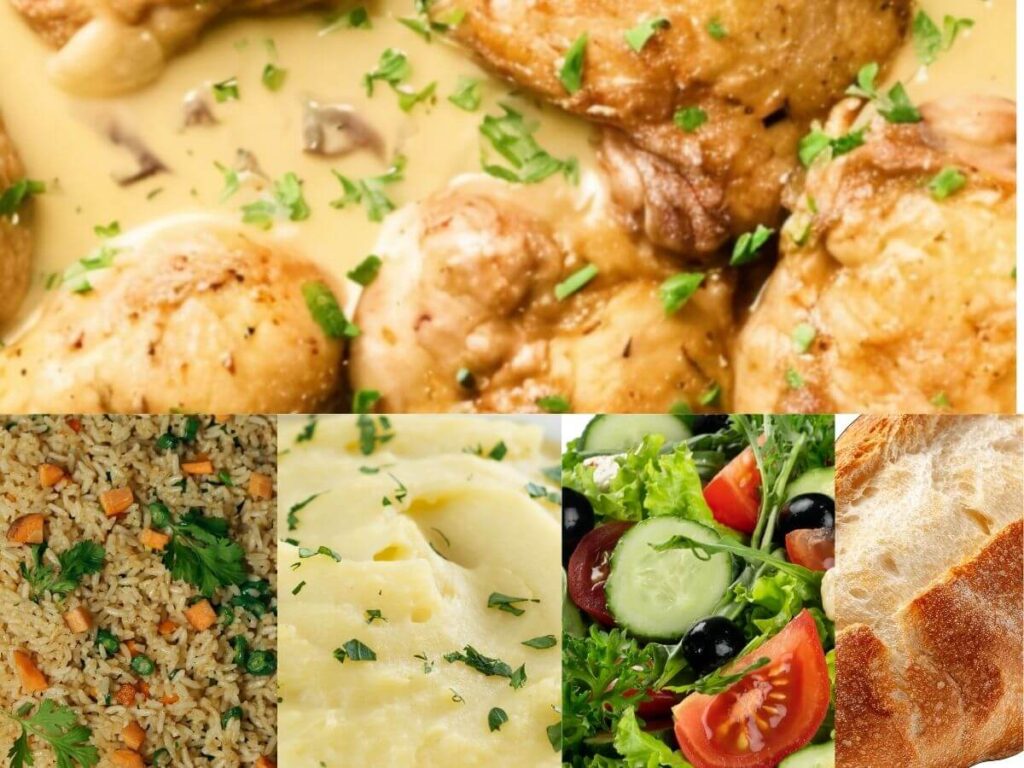
Chicken fricassee is incredibly versatile when it comes to sides. Here are some perfect pairings:
- Rice: White rice, brown rice, or wild rice pilaf soak up the delicious sauce beautifully
- Mashed Potatoes: Creamy mashed potatoes complement the rich sauce perfectly
- Crusty Bread: French bread or dinner rolls are ideal for mopping up every last drop
- Egg Noodles: A classic pairing that never disappoints
- Roasted Vegetables: Asparagus, green beans, or Brussels sprouts add a fresh contrast
- Simple Green Salad: A light salad with vinaigrette balances the richness of the dish
Celebrity Chef Takes
Famous chefs have their own spins on this classic. While Jamie Oliver’s chicken fricassee emphasizes fresh herbs and simple techniques that home cooks can easily follow, Gordon Ramsay’s version often includes refined touches like cognac or quality white wine to elevate the flavors.
Each chef brings their personality to the dish, but the core remains the same: tender chicken in a creamy, flavorful sauce that brings comfort to any table.
Tips for the Perfect Chicken Fricassee
Want to make your fricassee even better? Keep these tips in mind:
- Don’t skip the browning step: Even though it’s light, that initial sauté adds important flavor
- Use bone-in chicken: It adds more flavor and stays juicier than boneless pieces
- Fresh herbs matter: Thyme, parsley, and bay leaves make a noticeable difference
- Let it simmer: Don’t rush the cooking process slow simmering makes the chicken incredibly tender
- Finish with cream: Add cream at the end to prevent curdling and maintain a silky texture
- Taste and adjust: Always taste your sauce before serving and adjust seasonings as needed
Why Chicken Fricassee Deserves a Place at Your Table
In a world of quick meals and complicated recipes, chicken fricassee offers the best of both worlds. It’s simple enough for a weeknight dinner yet elegant enough to serve to guests. The creamy sauce feels indulgent without being overwhelming, and the tender chicken practically falls off the bone.
Whether you follow a traditional French recipe or try a Cuban variation, chicken fricassee brings warmth and satisfaction to any meal. It’s the kind of dish that makes your kitchen smell amazing and brings everyone to the table with smiles.
So next time someone asks you “what is chicken fricassee,” you can confidently explain this beautiful dish and maybe even invite them over to try your own version. After all, good food is meant to be shared, and chicken fricassee is definitely worth sharing.
Ready to try making chicken fricassee tonight? Start with the simple recipe above and adjust it to your taste. Before you know it, this classic French dish will become a regular favorite in your home cooking rotation.
Frequently Asked Questions (FAQs)
How long does it take to make chicken fricassee?
From start to finish, chicken fricassee typically takes about 50-60 minutes. This includes 10-15 minutes of prep time and 40-45 minutes of cooking time. The actual hands-on work is minimal since most of the cooking happens while the dish simmers.
Can I make chicken fricassee ahead of time?
Absolutely! Chicken fricassee actually tastes even better the next day as the flavors have more time to blend together. Store it in an airtight container in the refrigerator for up to 3 days. Reheat gently on the stovetop, adding a splash of cream or broth if the sauce has thickened too much.
Can I freeze chicken fricassee?
Yes, you can freeze it for up to 3 months. However, cream-based sauces can sometimes separate when frozen and thawed. For best results, freeze the chicken and sauce before adding the final cream, then stir in fresh cream when reheating.
What’s the best cut of chicken for fricassee?
Bone-in, skin-on chicken thighs and drumsticks work best because they stay moist during the longer cooking time and add more flavor to the sauce. However, you can also use chicken breasts if you prefer white meat just watch the cooking time so they don’t dry out.
Is chicken fricassee gluten-free?
Traditional chicken fricassee can be gluten-free if you don’t use flour to thicken the sauce. Many recipes thicken naturally through reduction or use cream and egg yolks instead of flour. Always check your ingredients to be sure.
Can I make chicken fricassee without wine?
Yes! Simply replace the wine with additional chicken broth or stock. You can also add a splash of lemon juice or white wine vinegar for a bit of acidity that wine would normally provide.
What makes chicken fricassee different from chicken à la king?
While both are creamy chicken dishes, chicken à la king typically includes bell peppers and pimentos and is served over toast or puff pastry. Fricassee focuses on a simpler vegetable combination and is usually served with rice or potatoes.
Is chicken fricassee healthy?
Chicken fricassee can be part of a balanced diet. To make it healthier, use skinless chicken, replace heavy cream with Greek yogurt or light cream, add more vegetables, and serve with whole grains. The dish provides good protein and can be adjusted to fit various dietary needs.
Why is my chicken fricassee sauce too thin?
If your sauce is too thin, you can simmer it uncovered for a few extra minutes to reduce and thicken it. Alternatively, mix a tablespoon of cornstarch with cold water and stir it into the sauce, or add a bit more cream which will naturally thicken as it cooks.
Can I use chicken breast instead of dark meat?
Yes, but reduce the cooking time to about 25-30 minutes to prevent the breast meat from becoming dry. Chicken breasts cook faster than thighs and drumsticks, so keep a close eye on them.
Conclusion
Chicken fricassee is more than just a recipe it’s a culinary tradition that has stood the test of time for good reason. This classic French dish brings together simple ingredients to create something truly special: tender chicken bathed in a creamy, flavorful sauce that comforts the soul and delights the palate.
Whether you’re cooking for a quiet family dinner or entertaining guests, chicken fricassee delivers both elegance and ease. The beauty of this dish lies in its flexibility you can stay traditional with a French approach, add a Cuban twist with peppers and tomatoes, make it healthier with more vegetables and less cream, or serve it over pasta for a heartier meal.
The techniques you learn from making chicken fricassee will serve you well in the kitchen. The gentle sautéing, the patient simmering, and the art of creating a perfectly balanced sauce are fundamental cooking skills that apply to countless other dishes.
So now that you know what chicken fricassee is, why it’s called that, and how it differs from regular chicken stew, there’s only one thing left to do: get cooking! Gather your ingredients, follow the simple recipe provided, and experience for yourself why this dish has been beloved for generations.
Your kitchen will smell incredible, your family will gather around the table with anticipation, and you’ll have the satisfaction of creating a restaurant-quality meal in your own home. That’s the magic of chicken fricassee it makes every cook feel like a chef and every meal feel like a celebration.
Happy cooking, and enjoy every creamy, delicious bite of your homemade chicken fricassee!