

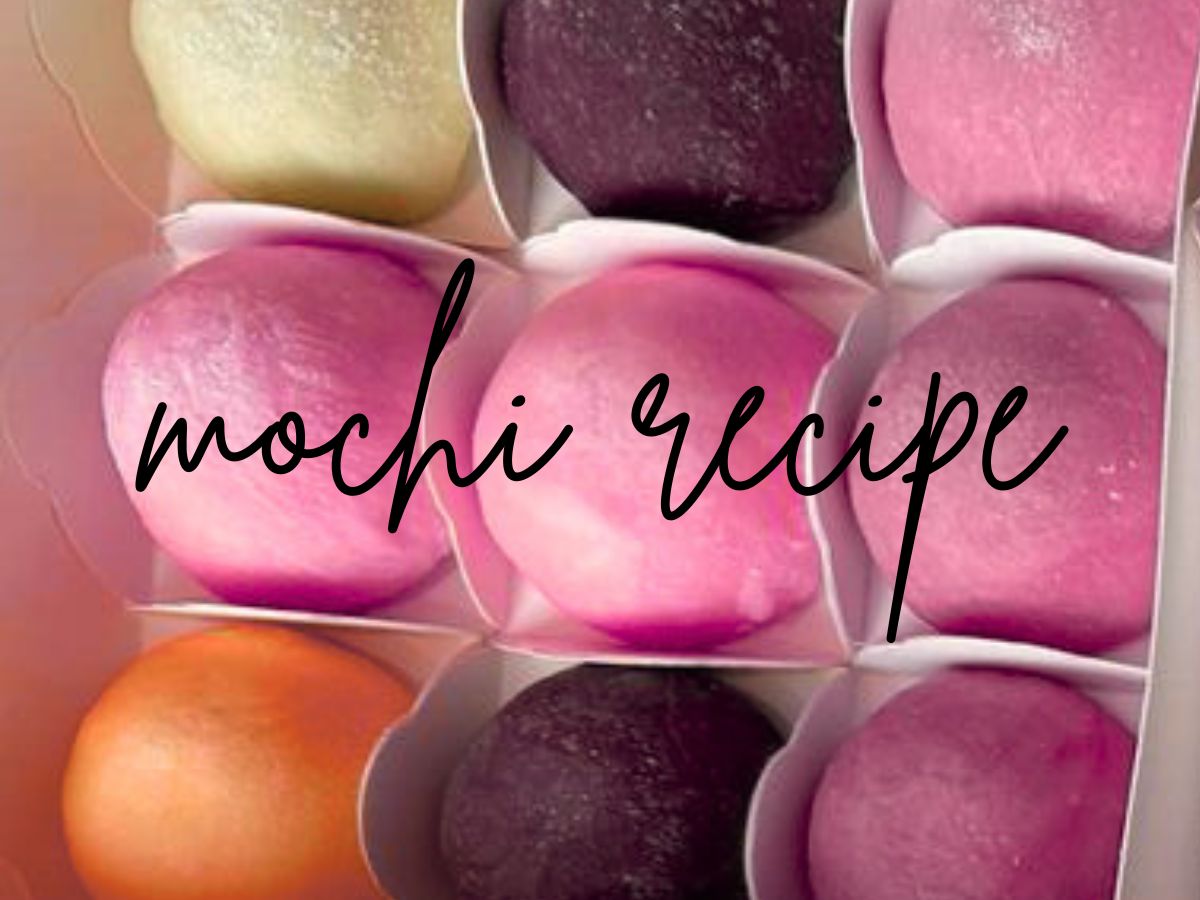
There is a moment the first time you bite into a properly made piece of mochi when you realise that ‘chewy’ as a food texture has been severely underrated your whole life. It is soft but springy. Pillowy but somehow firm. Sweet but not cloying. And it has this almost hypnotic quality that makes it nearly impossible to eat just one.
Mochi is a Japanese rice cake made from glutinous rice flour, and it has been a cornerstone of Japanese food culture for over a thousand years. Today it has gone fully global, you will find mochi ice cream in every supermarket freezer, matcha mochi at trendy dessert bars, butter mochi at Hawaiian potlucks, and homemade mango mochi recipes going viral on social media every other week.
This guide covers everything: what mochi actually is, how it is made, the classic plain mochi recipe, and a detailed breakdown of every popular variation from Hawaiian butter mochi to warabi mochi, ube mochi, strawberry mochi, chocolate mochi, and the ever-popular mochi ice cream. Whether you are a first-timer or a seasoned home cook looking to expand your repertoire, this is the only mochi guide you will need.
What Is Mochi?
Traditional mochi is made by pounding cooked glutinous rice (also called sweet rice or mochigome) into a smooth, stretchy dough. This process, called mochitsuki in Japanese, has been performed at New Year celebrations and festivals for centuries. The resulting dough is shaped by hand into small rounds, stuffed with fillings like sweet red bean paste (anko), or used as a wrapper for other desserts.
Modern home cooks most often make mochi using sweet rice flour (also sold as mochiko or glutinous rice flour) rather than whole pounded rice, which makes the process dramatically simpler and achievable in a regular kitchen. The texture is nearly identical and the flavour is just as good.
Today the word ‘mochi’ covers a fairly broad family of Japanese and Japanese-inspired rice cake desserts, from the traditional plain mochi recipe served at New Year to the ice-cream-filled mochi balls beloved worldwide. What they all share is that deeply satisfying, elastic chewiness that no other food in the world quite replicates.
Classic Plain Mochi Recipe Overview
The plain mochi recipe is your foundation. Once you understand this, every variation becomes straightforward. The base recipe is essentially just three ingredients sweet rice flour, sugar, and water, cooked together until they form a stretchy, soft dough. The magic is in the ratio and the technique.
| Detail | Info |
| Prep Time | 10 minutes |
| Cook Time | 15 minutes (stovetop) or 6 minutes (microwave) |
| Cooling Time | 20–30 minutes |
| Total Time | ~45 minutes |
| Yield | 12–15 small mochi pieces |
| Difficulty | Easy to Intermediate |
| Cuisine | Japanese |
Ingredients
Base Plain Mochi Recipe
- 200g (1 and 3/4 cups) sweet rice flour (mochiko or glutinous rice flour)
- 200ml (3/4 cup + 1 tbsp) water
- 80g (6 tablespoons) caster sugar or granulated sugar
- Katakuriko (potato starch) or cornstarch for dusting generously
For Sweet Red Bean Filling (Anko) Traditional
- 200g dried adzuki beans
- 150g sugar
- A pinch of salt
- Water for soaking and cooking
Alternatively, store-bought anko paste is perfectly acceptable and saves significant time.
For Mochi Ice Cream
- All base mochi ingredients above
- Your choice of ice cream flavour (vanilla, green tea, mango, strawberry)
- Extra cornstarch or potato starch for handling
Step-by-Step Method
Method 1: Stovetop (Traditional Mochi Recipe No Microwave)
This is the traditional stovetop approach for those who prefer the mochi recipe without microwave. It takes a little longer but gives you excellent control over the texture.
- Combine the sweet rice flour and sugar in a medium saucepan and whisk them together briefly.
- Slowly pour in the water while stirring, making sure no lumps form. The batter should be completely smooth and pourable.
- Place the saucepan over medium heat. Stir constantly with a silicone spatula or wooden spoon do not walk away.
- After 5–7 minutes the mixture will start to thicken and look almost solid in patches. Keep stirring and folding.
- Continue cooking for another 5–8 minutes, folding and pressing the dough against the pan. It will become very thick, glossy, and pull away from the sides of the pan. This is what you want.
- The dough is ready when it is completely opaque, very stretchy, and no longer wet-looking. It should hold its shape when you fold it.
- Transfer the dough immediately onto a surface generously dusted with potato starch or cornstarch.
- Dust the top of the dough heavily too it is extremely sticky when hot. Let it cool for 20–25 minutes before shaping.
Method 2: Microwave Mochi Recipe
The microwave mochi recipe is faster and just as effective for small batches. Many home cooks actually prefer it because the result is slightly more even.
- Whisk together sweet rice flour, sugar, and water in a microwave-safe bowl until completely lump-free.
- Cover the bowl loosely with plastic wrap, leaving a small gap for steam to escape.
- Microwave on high for 2 minutes. Remove, stir thoroughly the mixture will be partially cooked and lumpy.
- Cover again and microwave for another 2 minutes.
- Stir once more. Microwave for a final 1–2 minutes until the dough is fully cooked, glossy, and elastic. Total microwave time is typically 5–6 minutes, but all microwaves differ so watch carefully.
- Turn out onto a starch-dusted surface and allow to cool before shaping.
Shaping and Filling the Mochi
- Once the dough has cooled to a safe handling temperature (warm but not hot), dust your hands generously with starch.
- Pinch off pieces of dough about the size of a golf ball roughly 30–35g each.
- Flatten each piece into a disc about 8–9cm wide, working quickly before the dough sticks.
- Place a ball of filling (anko, a scoop of ice cream, a strawberry wrapped in anko, etc.) in the centre of the disc.
- Gather the edges of the dough up around the filling and pinch firmly to seal. Roll gently between your palms to smooth.
- Place seam-side down on a starch-dusted tray. Repeat with remaining dough.
- For mochi ice cream, work quickly with frozen ice cream scoops and return each finished piece to the freezer immediately.
Popular Mochi Recipe Variations
Butter Mochi Recipe (Hawaiian Butter Mochi)
Hawaiian butter mochi is not the same as traditional Japanese mochi it is a uniquely Hawaiian baked dessert that uses mochiko flour as its base but bakes up into a dense, chewy, slightly crispy-edged bar cake. If you have ever been to a Hawaiian potluck, you already know how quickly it disappears.
- 450g (1 box) mochiko sweet rice flour
- 400g (2 cups) sugar
- 2 teaspoons baking powder
- 4 large eggs
- 400ml (one 13.5 oz can) coconut milk
- 500ml (2 cups) whole milk
- 115g (1/2 cup / 1 stick) unsalted butter, melted
- 2 teaspoons vanilla extract
Whisk all wet ingredients together, then mix in the dry ingredients until smooth. Pour into a greased 9×13 inch baking pan and bake at 175°C (350°F) for 60–70 minutes until golden on top and a skewer comes out clean. Cool completely before cutting into squares. The butter mochi recipe is arguably the easiest mochi you can make at home because there is no sticky dough to handle it bakes like a brownie.
Matcha Mochi Recipe
Matcha mochi is one of the most popular flavour variations. The earthy, slightly bitter quality of good matcha works beautifully against the sweet, neutral dough base. Add 2 teaspoons of high-quality matcha powder to the base dry ingredients before adding water. Whisk the matcha into the flour before adding liquid to avoid clumping. Fill with sweet white bean paste (shiro an) for a classic pairing, or leave plain. For a more intense colour and flavour, increase to 3 teaspoons of matcha.
Mango Mochi Recipe
Mango mochi recipe is one of the most requested tropical variations. There are two great ways to go about it. First, for mochi with mango filling: take fresh, ripe mango and either blend it into a smooth paste mixed with a little condensed milk (freeze in small rounds before filling the mochi), or simply wrap small cubes of very firm mango in the plain mochi dough. Second, for mango-flavoured mochi dough itself: replace 60ml of the water in the base recipe with fresh mango puree and add a tiny pinch of turmeric for a more vibrant golden colour.
Strawberry Mochi Recipe (Ichigo Daifuku)
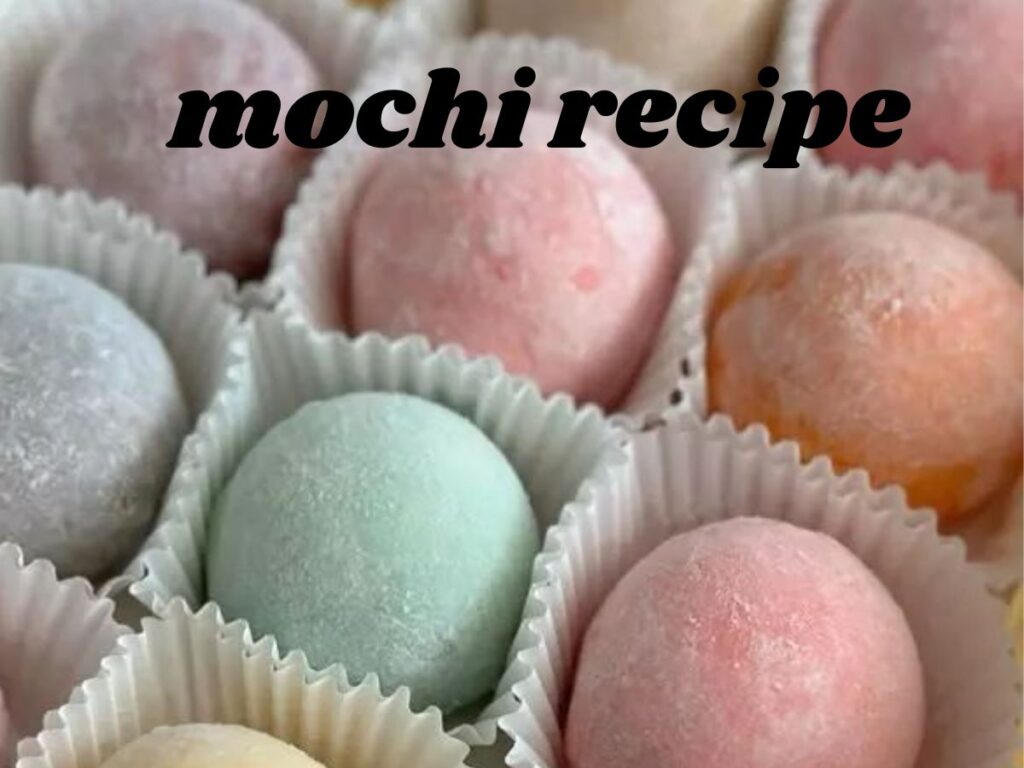
Strawberry mochi known in Japan as ichigo daifuku is one of the most visually beautiful and crowd-pleasing versions. Hull fresh, ripe strawberries and wrap each one in a thin layer of sweet red bean paste (anko). Then wrap the anko-covered strawberry in a disc of plain or lightly pink-colored mochi dough. The result is a perfect little parcel: soft mochi, creamy sweet bean, and a juicy whole strawberry at the centre. A few drops of pink food coloring in the dough makes these particularly beautiful for gifting.
Ube Mochi Recipe
Ube mochi uses the Filipino purple yam as its star ingredient and produces the most stunning deep violet colour imaginable. Add 2–3 tablespoons of ube halaya (ube jam) directly to the mochi dough batter before cooking, and reduce the water slightly to compensate. Alternatively, 1–2 teaspoons of ube extract can be used for a more concentrated colour and flavour. Fill with coconut cream cheese filling or more ube halaya for a fully ube experience.
Chocolate Mochi Recipe
Chocolate mochi satisfies a very specific craving. Add 2 tablespoons of good-quality unsweetened cocoa powder to the base dry ingredients. For extra intensity, replace 2 tablespoons of the water with melted 70% dark chocolate. Fill with a ganache centre (equal parts heavy cream and dark chocolate, chilled until firm) for a dessert that bridges Japanese and European confectionery traditions in the most satisfying way.
Warabi Mochi Recipe
Warabi mochi is a completely different style of mochi lighter, more translucent, and with a much more delicate texture than the classic sweet rice flour version. It is traditionally made from bracken starch (warabiko), though today arrowroot starch or a mix of potato starch and cornstarch is commonly used as a substitute. Combine 50g of warabi starch with 50g of sugar and 400ml of water, then cook over medium heat while stirring constantly until the mixture turns from white to translucent and thick. Pour into a pan, cool, cut into cubes, and dust generously in kinako (roasted soybean flour) with a drizzle of black sugar syrup. It is lighter and more refreshing than regular mochi perfect for summer.
Potato Mochi Recipe
Potato mochi is a savoury Japanese dish from Hokkaido rather than a sweet dessert. Boil and mash 400g of potatoes until completely smooth. Mix in 4 tablespoons of potato starch and a pinch of salt until a pliable dough forms. Shape into flat rounds about 1cm thick and pan-fry in a little butter or oil over medium heat for 3–4 minutes per side until golden. Brush with a mixture of soy sauce, mirin, and sugar while still in the pan. The result is chewy, crispy-edged, savoury little cakes that are extraordinarily satisfying as a side dish or snack.
Mochi Recipe with Cornstarch
If you do not have sweet rice flour (mochiko), a mochi recipe with cornstarch can be made as a substitute, though the texture will be different slightly firmer and less elastic. Combine 120g of cornstarch with 60g of sugar and 250ml of water. Cook on the stovetop or microwave using the same method as the base recipe. The result is edible and quite pleasant, but cornstarch mochi lacks the deep chewiness of the real thing. For the closest texture to authentic mochi using pantry staples, a blend of 80g cornstarch and 40g regular rice flour works better than cornstarch alone.
Mochi Ice Cream Recipe
Mochi ice cream is the version that most people outside Japan know best. You will need to work fast and keep everything cold. Scoop your ice cream flavour of choice into balls (about 30g each) and freeze solid on a lined tray for at least 2 hours. Make the plain mochi dough, cool it, and chill it in the refrigerator for 20 minutes, cold dough is far easier to work with for ice cream filling. Working quickly, flatten a piece of chilled mochi dough, place a frozen ice cream ball in the centre, wrap and seal, and return immediately to the freezer. Let the finished mochi ice cream set for at least 1 hour before eating. Remove from the freezer 3–5 minutes before serving so the mochi softens slightly.
Serving and Storage Temperature Guide
Serving Temperature
Plain and filled mochi (with bean paste or fruit) are best served at room temperature, around 18–22°C. At this temperature the dough is at its most supple and chewy. Cold mochi straight from the refrigerator becomes noticeably firmer and loses some of its characteristic stretch, so allow it to sit at room temperature for 10–15 minutes before eating.
Mochi ice cream is the exception serve it straight from the freezer, or after just 3–5 minutes at room temperature, which allows the mochi shell to soften while keeping the ice cream intact.
Storage Guide
| Mochi Type | Storage Duration | Best Method |
| Plain / bean-filled mochi | 1–2 days | Airtight container, room temp; wrap individually |
| Fruit-filled mochi | Same day only | Refrigerate; eat within 6 hours of making |
| Mochi ice cream | Up to 2 weeks | Freezer, individually wrapped in cling film |
| Butter mochi (baked) | 3–4 days | Room temp, airtight container; refrigerate in summer |
| Warabi mochi | Same day | Best eaten within hours; starch weeps over time |
| Potato mochi (savoury) | 2–3 days | Refrigerate; re-pan-fry before eating |
Do not refrigerate plain or bean-filled mochi for extended periods the cold causes the starch to retrograde, making the dough hard and unpleasant. If you must refrigerate, microwave each piece for 10–15 seconds to restore softness before eating.
Nutritional Value of Mochi
Mochi is a carbohydrate-dense food with moderate sugar content. The nutritional profile varies depending on the variation (plain, filled, baked with butter, etc.). Below is an approximate guide for classic plain mochi (one piece, approximately 35g, no filling):
| Nutrient | Per Piece (Plain, ~35g) |
| Calories | ~100 kcal |
| Carbohydrates | 22g |
| Sugars | 8g |
| Protein | 1.5g |
| Total Fat | 0.3g |
| Fibre | 0.2g |
| Sodium | 2mg |
| Gluten | Naturally gluten-free |
Plain mochi is naturally gluten-free (glutinous rice flour contains no gluten despite its name ‘glutinous’ refers to its sticky texture, not its gluten content). It is also fat-free in its basic form. The calorie count increases significantly with filling an anko-filled mochi adds roughly 50–70 kcal, while a mochi ice cream piece can range from 80 to 120 additional calories depending on the ice cream flavor.
Butter mochi is notably different nutritionally each square contains roughly 250–320 kcal with around 12–14g of fat, owing to the full stick of butter and two cups of milk in the recipe. Delicious, but a genuine treat rather than a light snack.
Alternative Ingredients and Techniques
Flour Alternatives
- Tapioca starch: Can be partially substituted (up to 30%) for sweet rice flour to produce a slightly more transparent, chewier mochi. Works especially well in warabi-style preparations.
- Shiratamako: A premium Japanese sweet rice flour that produces an even silkier, softer mochi than regular mochiko. If you find it at a Japanese grocery store, use it in a 1:1 ratio it is worth the upgrade.
- Cornstarch blend: As covered in the recipe with cornstarch section, a blend of 2 parts cornstarch to 1 part plain rice flour can work as a last-resort substitute, though the texture will be noticeably different.
Sugar Alternatives
- Honey: Substitute in equal weight but reduce the water slightly. Adds a gentle floral sweetness.
- Coconut sugar: Works well and adds a lovely caramel undertone, particularly good in mango or ube mochi.
- Sugar-free versions: Erythritol or monk fruit sweetener can be used in equal amounts for a lower-calorie mochi, though the texture can be slightly less smooth.
Filling Alternatives
- Nutella: Works surprisingly well as a mochi filling freeze tablespoon-sized dollops first before wrapping.
- Peanut butter mixed with a little icing sugar: Rich, creamy, and irresistible.
- Cream cheese and fruit jam: A tangy, Western-inspired filling that pairs especially well with strawberry or matcha mochi.
- Chestnut paste (kuri an): Traditional Japanese filling with a deeply autumnal, earthy sweetness.
- Tiramisu cream: Mascarpone, a little espresso, and icing sugar an Italian-Japanese fusion that sounds strange and tastes wonderful.
Tips and Tricks for Perfect Mochi Every Time
- Use starch generously and without guilt. Mochi dough is one of the stickiest substances you will encounter in a home kitchen. Dust your hands, your surface, your tools, and the finished pieces liberally with katakuriko (potato starch) or cornstarch. There is no such thing as too much dusting at this stage.
- Work quickly once the dough is cool enough to handle. Mochi dough firms up as it cools. The ideal working temperature is warm but not burning you want it pliable but not lava-hot. Once it reaches room temperature it becomes significantly harder to shape.
- Cook the dough until it is completely opaque. Undercooked mochi dough looks slightly translucent in patches and will taste raw and starchy. A fully cooked dough is uniformly white (or uniformly coloured if you have added flavouring), glossy, and very stretchy.
- For mochi ice cream, freeze everything first. Pre-freeze your ice cream scoops for at least 2 hours. Chill your mochi dough. Work on a cold surface. The fewer seconds you spend handling the ice cream, the cleaner and more successful your results will be.
- Do not skip the resting time. Freshly cooked mochi dough is extremely hot trying to shape it immediately will burn your hands and produce uneven results. Fifteen to twenty minutes of cooling time makes an enormous difference.
- Roll portions to equal sizes for consistency. If you are making mochi for gifting or entertaining, weigh each piece on a kitchen scale. 30–35g per piece produces a nicely proportioned, two-bite mochi.
- Add food colouring to the water before mixing. If you want coloured mochi dough, add gel food colouring to the water before combining with the flour. This gives a much more even, saturated colour than trying to knead it in afterwards.
- For butter mochi, do not under bake. The top should be a deep golden brown and the edges slightly darker this is not burning, it is caramelization, and it is the best part. An under baked butter mochi will be gummy inside rather than satisfyingly chewy.
Frequently Asked Questions (FAQs)
Is mochi gluten-free?
Yes. Sweet rice flour (mochiko / glutinous rice flour) contains no gluten. Despite the word ‘glutinous’ in its name, this refers to the sticky, glue-like texture of the cooked rice, not to gluten content. Plain mochi made with just sweet rice flour, sugar, and water is naturally and completely gluten-free. However, always check the packaging of store-bought sweet rice flour as some are processed in facilities that also handle wheat.
Why is my mochi too hard?
Hard mochi is almost always the result of one of three things: over-cooking the dough (rare on the stovetop but can happen in the microwave), refrigerating it for too long, or letting it cool completely before shaping and sealing. To fix firm mochi, microwave each piece for 10–15 seconds to restore suppleness. To prevent it, work quickly, wrap finished pieces individually, and store at room temperature for same-day eating.
Can I make mochi without a microwave?
Absolutely. The stovetop mochi recipe without microwave described in this guide produces identical and some would say superior results. It just requires more active stirring and a little more time. A double boiler (bowl over simmering water) is also an option for very precise, gentle cooking that reduces the risk of burning the bottom of the dough.
What is the difference between mochiko and glutinous rice flour?
They are the same thing by different names. Mochiko is simply the Japanese brand name (Koda Farms makes the most well-known version). Glutinous rice flour, sweet rice flour, and mochiko all refer to flour made from ground short-grain glutinous rice. They can be used interchangeably in any mochi recipe.
How do I prevent mochi from sticking to everything?
Starch is your best friend. Dust every surface, both sides of your dough, your hands, and the finished mochi pieces with potato starch or cornstarch. Some bakers also line their storage containers with starch-dusted parchment paper. The starch creates a dry barrier that prevents sticking without affecting the flavour or texture noticeably.
How long does mochi last?
Plain and anko-filled mochi is best eaten on the day it is made but stays good for 1–2 days at room temperature in an airtight container. Fruit-filled mochi should be eaten the same day. Mochi ice cream keeps for up to 2 weeks in the freezer. Baked butter mochi stays good for 3–4 days at room temperature.
What does raw mochi dough taste like?
Raw or undercooked mochi dough tastes very starchy, chalky, and slightly unpleasant not unlike eating raw flour. This is a useful cue when cooking on the stovetop: if your dough still tastes floury or starchy, it needs more time on the heat.
Can I use regular rice flour instead of sweet rice flour?
No, not as a direct substitute. Regular rice flour is made from non-glutinous rice and does not have the sticky, elastic properties that make mochi what it is. Using regular rice flour will give you a crumbly, dense rice cake rather than the stretchy, chewy mochi texture. Always use mochiko, sweet rice flour, or glutinous rice flour specifically.
Conclusion
Mochi is one of those recipes that feels intimidating before you try it and then feels almost magical once you have. The first time you pull a glossy, stretchy ball of dough off the stovetop and realise you have just made something genuinely beautiful from three basic ingredients, it is a surprisingly satisfying moment.
The beauty of the mochi recipe family is how far it stretches from that single simple base. From the deeply traditional plain mochi recipe and ichigo daifuku of Japanese confectionery culture, to the Hawaiian butter mochi baked in a 9×13 pan, to the ube mochi in electric violet and the mango mochi with its tropical sweetness the possibilities are vast and they are all achievable at home with patience, plenty of starch, and quick hands.
Start with the plain version. Get comfortable with the dough. Then explore the variations that interest you most. Mochi making is a skill you will use for the rest of your life, and once you have mastered it, you will never buy the supermarket version again.