
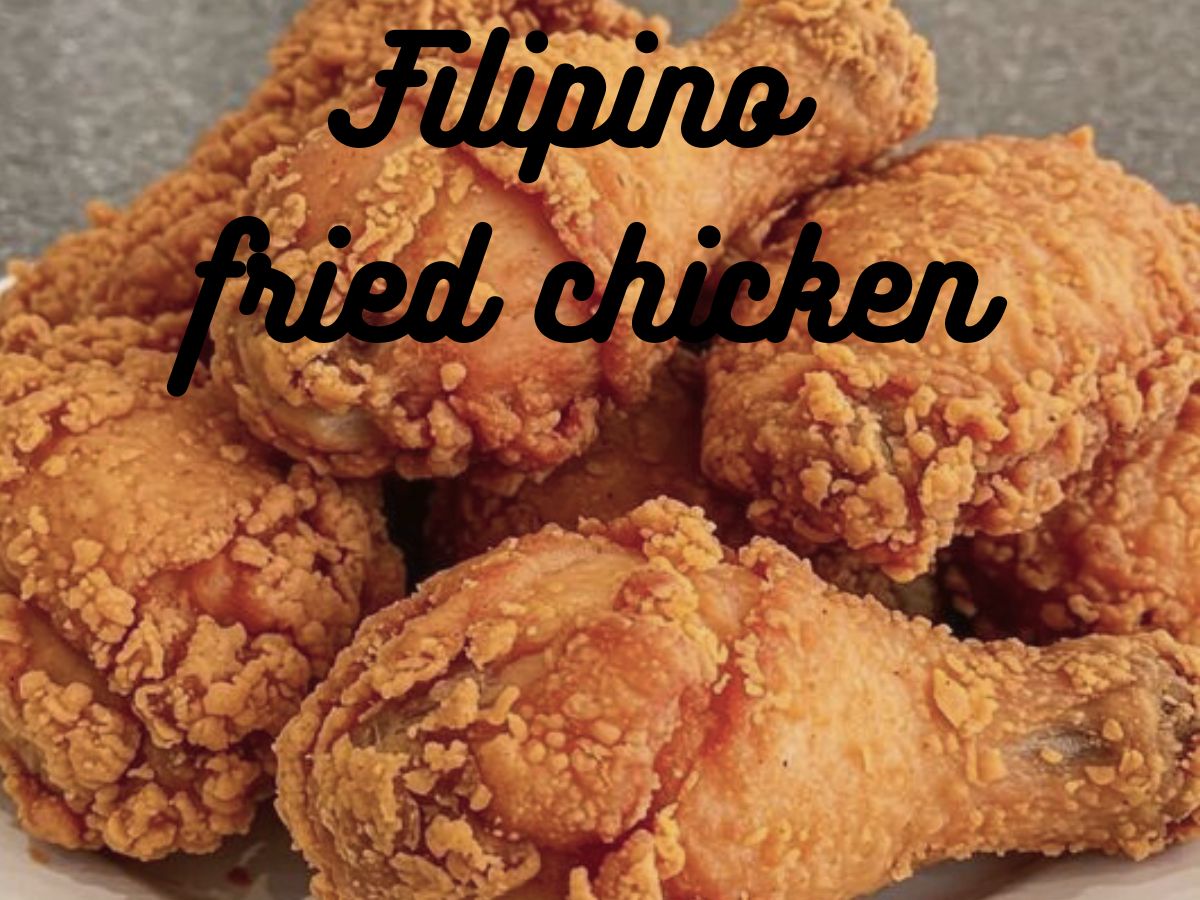
If you have ever bitten into a piece of Filipino fried chicken genuinely, properly made Filipino fried chicken you will understand immediately why people line up for it. The skin is shatteringly crispy, almost audibly so. The meat underneath is impossibly juicy. And the flavor is unlike any other fried chicken in the world: a deeply savory, slightly sweet, garlicky profile that is built through a marinade rather than just a coating.
Filipino fried chicken has a devoted following that stretches far beyond the Philippines. It is one of the most beloved foods in the Filipino diaspora worldwide, tied to memories of family meals, fast food chains, birthday parties, and late-night merienda (snacking). At the centre of it all sits Jollibee the iconic Filipino fast food chain whose Chic enjoy is arguably the most famous Filipino fried chicken in the world. But homemade Filipino fried chicken, made with patience and the right technique, gives even Jollibee a serious run for its money.
What Makes Filipino Fried Chicken Different?
Fried chicken exists in virtually every food culture on earth, but Filipino fried chicken has a character that is genuinely its own. The differences come down to a few key elements that set it apart from American Southern fried chicken, Korean fried chicken, Japanese karaage, and every other regional version.
First, the marinade. Filipino fried chicken is always marinated before frying usually in a combination of soy sauce, calamansi juice (or lemon/lime as a substitute), garlic, and sometimes a little sugar or banana ketchup. This soy-citrus-garlic base gives the chicken a deep umami savouriness with a subtle sweetness and tang that permeates the meat before a single crumb of coating touches it.
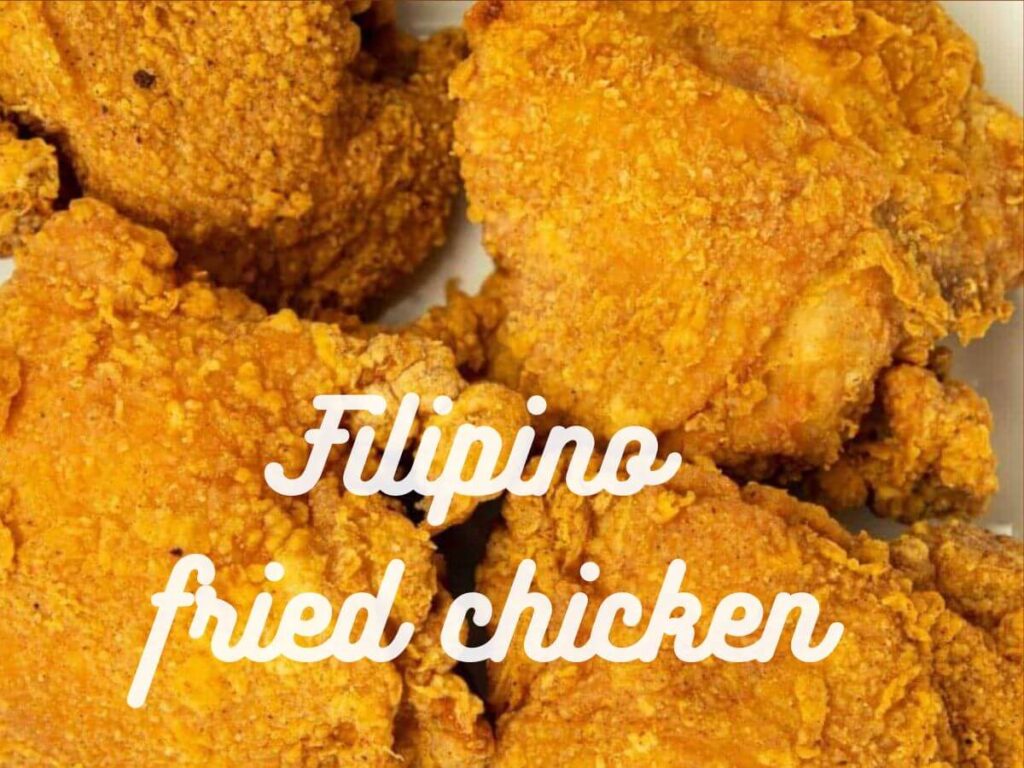
Second, the coating. The traditional Filipino fried chicken coating is relatively light compared to the thick, heavily battered coatings of American or Korean fried chicken. It is typically a seasoned flour mixture sometimes with a little cornstarch added for extra crunch that clings to the marinated chicken and fries to a golden, craggy crust that shatters satisfyingly at first bite.
Third, the fat and frying method. Filipino fried chicken is traditionally deep-fried in neutral oil at a relatively moderate temperature for a longer time, which ensures the inside cooks through completely before the outside over-browns. This low-and-slow approach (by deep frying standards) is what gives the chicken its juicy interior and means even large bone-in pieces cook evenly all the way through.
And finally, the accompaniments. Filipino fried chicken is almost always served with steamed white rice, a simple dipping sauce (either a vinegar-based sawsawan or banana ketchup the Filipino national condiment), and often a side of pickled papaya relish called atchara. These elements complete the dish in a way that no other combination quite does.
Famous Filipino Fried Chicken Brands, Chains, and Restaurants
Before we get to the recipe, it is worth understanding the landscape of Filipino fried chicken fast food and restaurant culture, because these chains have defined what Filipino fried chicken tastes like for millions of people.
Jollibee: The Most Famous Filipino Fried Chicken
No discussion of Filipino fried chicken is complete without Jollibee. Founded in the Philippines in 1978, Jollibee is now one of the largest fast food chains in Asia and has expanded aggressively to the United States, Canada, the UK, the Middle East, and beyond. Its signature product, Chickenjoy, is the most famous Filipino fried chicken in the world a bone-in piece of chicken with an extraordinarily crispy, craggy skin and an incredibly juicy interior, served with a signature gravy.
The Jollibee Filipino fried chicken recipe has been the subject of endless recreation attempts by home cooks worldwide. The secret lies in the marinade (which is reported to include a proprietary blend of seasonings and a longer-than-usual marinating time), the coating (a seasoned flour with what appears to be a small amount of fine breadcrumb-style powder mixed in), and the double-frying technique that produces that famously shattering crunch. The Jollibee franchise now operates thousands of locations globally, making it the most successful Filipino fried chicken franchise in history.
Other Notable Filipino Fried Chicken Chains and Brands
| Brand / Chain | What Makes It Notable |
| Max’s Restaurant | Often called ‘The House That Fried Chicken Built.’ Max’s is a Filipino restaurant chain known for its whole fried chicken crispier and more flavorful than most fast food versions. It has been operating since 1945 and is considered a national institution. |
| Chooks-to-Go | A massive Filipino fried chicken brand known for its rotisserie and fried chicken sold by the whole bird. One of the fastest-growing Filipino fried chicken chains and now available internationally. |
| Andok’s | Another beloved Filipino roasted and fried chicken chain, famous for its whole chickens cooked on a spit. A staple of Filipino street food and market culture. |
| Mang Inasal | Best known for grilled rather than fried chicken, but its fried chicken offerings have grown in popularity. Now owned by Jollibee Foods Corporation. |
| Angel’s Burger | A fast food chain known for affordable, flavourful fried chicken and burgers. Popular among younger Filipinos. |
If you are searching for Filipino fried chicken near you, Jollibee locations are the easiest to find internationally. In major cities with significant Filipino communities Los Angeles, San Francisco, New York, London, Dubai, Sydney, Toronto you are likely to find not just Jollibee but also Max’s and other Filipino restaurants serving their own versions. A quick search for ‘Filipino fried chicken restaurant near me’ will usually surface both chain locations and independent Filipino restaurants.
Recipe Overview:
The recipe below is a home cook’s version of classic crispy Filipino fried chicken that draws on traditional Filipino flavours and techniques. It produces chicken that is deeply seasoned, genuinely juicy on the inside, and as crispy on the outside as any restaurant version. This is the recipe you make when you want to understand exactly why Filipino fried chicken has such a devoted following.
| Detail | Info |
| Marinating Time | Minimum 4 hours; overnight strongly recommended |
| Prep Time | 20 minutes (after marinating) |
| Frying Time | 18–25 minutes per batch |
| Total Active Time | ~45 minutes |
| Servings | 4–6 people |
| Difficulty | Easy to Intermediate |
| Cuisine | Filipino |
Ingredients
For the Marinade
- 1.2–1.5kg bone-in chicken pieces (drumsticks, thighs, and wings work best; whole cut-up chicken is ideal)
- 4 tablespoons soy sauce (Filipino brands like Silver Swan or Datu Puti are ideal; regular light soy sauce works fine)
- 3 tablespoons calamansi juice or substitute with 2 tablespoons fresh lime juice plus 1 tablespoon fresh lemon juice
- 6 cloves of garlic, minced or grated
- 1 teaspoon ground black pepper
- 1 tablespoon white sugar
- 1 teaspoon fish sauce (optional but adds depth)
- Half a teaspoon of MSG (optional widely used in Filipino cooking and produces a noticeably more restaurant-quality result)
For the Coating (Filipino Fried Chicken Powder Mix)
- 200g plain all-purpose flour
- 50g cornstarch
- 2 teaspoons garlic powder
- 1 teaspoon onion powder
- 1 and a half teaspoons fine salt
- 1 teaspoon ground black pepper
- 1 teaspoon paprika
- Half a teaspoon of white pepper
- Half a teaspoon of baking powder (gives extra lightness to the crust)
For Frying
- Enough neutral oil for deep frying at least 1 litre of vegetable, canola, or rice bran oil
For Serving
- Steamed white rice essential
- Banana ketchup for dipping (the Filipino condiment that is sweet, tangy, and unmistakably Filipino)
- White cane vinegar or spiced vinegar (sukang maasim) as an alternative dipping sauce
- Atchara (pickled green papaya relish) optional but traditional and very good
How to Make Filipino Fried Chicken {Step by Step}
Prepare the Marinade and Marinate the Chicken
- Combine all the marinade ingredients in a large bowl and whisk until the sugar and salt have dissolved.
- Add the chicken pieces and toss to coat thoroughly. Make sure every piece is well covered.
- Cover with cling wrap or transfer to a sealed zip-lock bag and refrigerate. Marinate for a minimum of 4 hours, but overnight (8–12 hours) produces the best results by far. The soy sauce and calamansi work together to tenderise the meat and push flavour deep into the muscle fibres.
- Remove the chicken from the refrigerator 30 minutes before frying to take the chill off. Cold chicken dropped into hot oil drops the oil temperature dramatically and leads to uneven cooking.
Make the Coating
- Combine all the coating ingredients in a wide, shallow bowl or baking tray and whisk together until evenly mixed.
- This is your Filipino fried chicken powder mix a well-seasoned dredging flour that forms the crust.
- Take each piece of marinated chicken and dredge it in the flour mixture. Press firmly to ensure the coating adheres. Shake off any loose excess.
- For an extra-crispy crust, dip the dredged chicken back into a little of the leftover marinade (or a splash of water), then dredge in the flour a second time. This double dredge creates a thicker, craggier crust and that extra crust is where all the crunch lives.
- Set the coated pieces on a wire rack and let them rest for 10–15 minutes before frying. This resting period allows the coating to adhere properly and gives you a noticeably better crust.
Fry the Chicken
- Pour the oil into a large, deep, heavy-bottomed pot or deep fryer. You want at least 8–10cm of oil depth so the chicken can be mostly submerged.
- Heat the oil to 160–165°C (320–330°F). Use a kitchen thermometer this is not optional if you want consistent results. This temperature is deliberately lower than many other fried chicken recipes.
- Carefully lower the chicken pieces into the hot oil one at a time, working in batches. Do not crowd the pot this drops the oil temperature and makes the chicken greasy rather than crispy.
- Fry at 160–165°C for 15–18 minutes for drumsticks and thighs, and 10–12 minutes for wings. The low, steady temperature cooks the meat through without burning the outside.
- Remove the chicken and drain on a wire rack. Allow a 3-minute rest.
- Now raise the oil temperature to 180–185°C (355–365°F) and fry the same pieces again for 2–3 minutes. This second, hotter fry is what creates the signature Filipino fried chicken crunch the exterior gets a rapid, intense blast of heat that sets the crust into an almost glass-like crispiness.
- Drain again on the wire rack. Never drain fried chicken on paper towels the steam from the hot chicken gets trapped and makes the bottom soggy. A wire rack lets air circulate all around.
The Jollibee-Inspired Version
For a crispy Filipino fried chicken recipe that closely mimics the famous Jollibee Chickenjoy style, make these specific adjustments:
- Marinate the chicken for a full 24 hours if possible. The Jollibee flavour is noticeably deeper than most home recipes, and time is a significant part of why.
- Add 1 teaspoon of annatto powder (achuete) to the coating flour this gives the finished chicken its characteristic amber-orange glow.
- Add a teaspoon of fine desiccated coconut powder and a half teaspoon of milk powder to the coating mix. These ingredients promote extra browning and a subtle sweetness in the crust.
- The Jollibee gravy: Make a quick brown gravy by melting 2 tablespoons of butter, cooking 2 tablespoons of flour in it for 1 minute, then adding 400ml of chicken stock and a tablespoon each of soy sauce and Worcestershire sauce. Simmer until thickened. This gravy is as iconic as the chicken itself.
Serving and Storage Temperature Guide
Serving Temperature
Filipino fried chicken is best eaten hot, ideally within 10–15 minutes of coming out of the oil. The internal temperature of safely cooked chicken must reach 74°C (165°F) at the thickest part, away from the bone. At this internal temperature the meat is fully cooked through, juicy, and at its best.
If you need to hold cooked chicken warm for a short period, keep it on a wire rack in an oven set to 90–100°C (195–210°F). Do not cover it trapped steam softens the crust rapidly. Properly held at this temperature, the chicken will stay crispy for up to 30–40 minutes.
Storage Guide
| Storage Method | Duration | Reheating Notes |
| Refrigerator (cooked) | 3–4 days | Reheat in oven at 200°C for 12–15 mins on a wire rack restores crispiness |
| Freezer (cooked) | Up to 2 months | Freeze on tray first, then bag; reheat from frozen at 190°C for 20–25 mins |
| Freezer (marinated, raw) | Up to 3 months | Best method; defrost overnight in fridge, coat and fry fresh |
| Room temp (cooked) | 2 hours maximum | Do not leave cooked chicken at room temperature beyond 2 hours |
The single best way to reheat leftover Filipino fried chicken is in an air fryer at 180°C for 8–10 minutes or in a conventional oven at 200°C on a wire rack. Both methods restore a remarkable amount of the original crispiness. The microwave, while convenient, produces soft, rubbery skin and should only be used as a last resort.
Nutritional Value of Filipino Fried Chicken
The nutritional values below are approximate and based on one piece of bone-in fried chicken (approximately a drumstick, around 120g of edible meat after cooking), using the full recipe as described with the soy-calamansi marinade and flour-cornstarch coating.
| Nutrient | Per Piece / Drumstick (Approx.) |
| Calories | 280–320 kcal |
| Protein | 24g |
| Total Fat | 16g |
| Saturated Fat | 3.5g |
| Carbohydrates | 14g |
| of which Sugars | 2g |
| Fibre | 0.5g |
| Sodium | 520–620mg |
| Iron | ~8% of daily value |
| Vitamin B6 | ~20% of daily value |
| Niacin (B3) | ~35% of daily value |
The sodium content is notably higher than plain fried chicken owing to the soy sauce marinade. Those monitoring sodium intake can reduce the soy sauce quantity or use a lower-sodium version without significantly compromising the flavour. The protein content is excellent, and chicken thigh and drumstick pieces provide more iron and zinc than white meat portions.
Alternative Ingredients and Techniques
Marinade Alternatives
- Coconut aminos: A soy sauce substitute made from coconut sap lower in sodium, slightly sweeter, and a great option for those avoiding soy. Use in a 1:1 ratio.
- Pineapple juice in the marinade: Replacing the calamansi with a mix of lime juice and a tablespoon of pineapple juice adds a tropical sweetness and the natural enzymes in pineapple also help tenderise the meat.
- Vinegar-forward marinade: Some regional Filipino recipes use cane vinegar as the acid component instead of calamansi. This produces a slightly sharper, more tangy-flavoured chicken that is particularly good when served with plain rice.
- Ginger and lemongrass addition: Add 1 tablespoon of grated fresh ginger and a bruised stalk of lemongrass to the marinade for a more aromatic, Southeast Asian flavour profile.
Coating Alternatives
- Rice flour: Substitute up to half the all-purpose flour with rice flour for an even crispier, more shatteringly thin crust. This is a technique borrowed from Japanese karaage and works exceptionally well.
- Potato starch: Replacing the cornstarch with potato starch produces a lighter, more translucent crust with an almost glass-like crunch.
- Panko breadcrumb addition: Mixing a small amount of fine panko into the coating adds extra texture and promotes an irregular, craggier surface that holds its crunch exceptionally well.
- Seasoned store-bought coating powder: Several Filipino brands produce ready-made fried chicken coating powder specifically for Filipino-style chicken most Asian grocery stores carry these. Brand names to look for include Mama Sita’s and UFC. These are convenient, consistent, and produce reliably good results.
Cooking Method Alternatives
- Air fryer Filipino fried chicken: Coat the marinated chicken as normal. Spray generously with cooking oil and air fry at 190°C for 20–25 minutes, turning once halfway. The result is noticeably less crispy than deep-fried but still very good and substantially lower in fat.
- Oven-baked Filipino fried chicken: Bake on a wire rack over a foil-lined tray at 220°C for 35–40 minutes, turning once. Spray with oil halfway through. Again, less crispy than deep-fried but a healthier weeknight option.
- Pressure cooker then fry: This technique pressure cooking the marinated chicken briefly before a quick deep fry is used commercially to ensure perfectly cooked, fall-off-the-bone tender meat inside the crispiest possible exterior. Pressure cook at high pressure for 8–10 minutes, cool slightly, coat, and fry at 180°C for just 5–6 minutes to set the crust.
Tips and Tricks for the Best Crispy Filipino Fried Chicken
- Marinate overnight, no exceptions. The difference between 2-hour marinated chicken and overnight marinated chicken is significant and immediately noticeable in the depth of flavour. If you want your Filipino fried chicken to taste the way it does from a good Filipino fried chicken restaurant, the marinating time is non-negotiable.
- Let the coated chicken rest before frying. That 10–15 minute rest after coating is one of the most underrated steps in the entire process. The flour hydrates slightly from the moisture on the surface of the chicken and forms a more cohesive, crunchy crust during frying.
- Use a thermometer. Oil temperature is the single biggest variable in fried chicken quality. Too hot and the outside burns before the inside cooks. Too cool and the chicken absorbs excess oil and turns greasy. A cheap kitchen thermometer eliminates all of that uncertainty.
- Double fry for maximum crunch. The two-stage frying method lower temperature first to cook through, higher temperature second to crisp the exterior is the professional technique behind the crunch at Jollibee and every other great Filipino fried chicken restaurant. It takes a little extra time but the result is in a completely different category to single-fry chicken.
- Never crowd the frying pot. Overcrowding drops the oil temperature, leads to steaming rather than frying, and produces pale, greasy, soft-skinned chicken. Fry in small batches and let the oil recover its temperature between each one.
- Drain on a wire rack, not paper towels. Paper towels trap steam from the hot chicken and make the bottom of each piece soft. A wire rack allows complete air circulation and keeps every surface crispy.
- Serve with banana ketchup. This is not just a condiment preference banana ketchup is genuinely essential to the Filipino fried chicken experience. Its sweet, tangy, slightly spiced flavor is the perfect counterpoint to the salty, savory chicken. It is available at most Asian grocery stores and is worth seeking out specifically.
- Try the atchara pairing. Pickled green papaya relish (atchara) is the Filipino equivalent of coleslaw alongside fried chicken and the pairing is inspired the bright, pickled acidity cuts through the richness of the fried chicken beautifully.
Frequently Asked Questions (FAQs)
What makes Filipino fried chicken different from American fried chicken?
The main differences are the marinade, the coating style, and the accompaniments. Filipino fried chicken uses a soy sauce and calamansi (citrus) marinade that infuses the meat with a savoury-sweet-tangy flavour from within. American Southern fried chicken typically uses a buttermilk brine. The coating in Filipino-style chicken is lighter and more delicate than the thick, heavy batter of Southern fried chicken. Filipino fried chicken is always served with rice and banana ketchup or spiced vinegar rather than biscuits and honey.
What is the name of the most famous Filipino fried chicken?
The most famous Filipino fried chicken by name is Chickenjoy, the signature fried chicken product of Jollibee. It is widely considered the defining version of Filipino fried chicken fast food and the flavour most Filipinos associate with the category. Outside of Jollibee, Max’s Restaurant fried chicken is considered by many food critics to be the best quality traditional Filipino fried chicken, having served it since 1945.
Where can I find Filipino fried chicken near me?
Jollibee has expanded significantly and now operates in the United States, Canada, United Kingdom, Australia, the Middle East, and across Southeast Asia. Searching ‘Jollibee near me’ will find the nearest chain location. For independent Filipino restaurants serving fried chicken, search ‘Filipino restaurant near me’ or ‘Filipino food near me.’ In cities with large Filipino communities Los Angeles, San Francisco, New York, Toronto, London, Dubai, Sydney — there will typically be multiple options beyond just the chains.
What is the secret to extra crispy Filipino fried chicken?
Three things working together produce the crispiest Filipino fried chicken. First, a very dry surface on the chicken before coating pat it dry after marinating. Second, the double-dredge method: coat in flour, dip briefly in liquid, coat again. Third, and most importantly, the double-fry technique: first fry at lower temperature to cook through, rest briefly, then second fry at higher temperature to set a shattering crust. The addition of cornstarch or rice flour to the coating mix also contributes significantly to crispiness.
What is calamansi and what can I use instead?
Calamansi (also spelled kalamansi) is a small citrus fruit native to the Philippines that is central to Filipino cooking. Its juice tastes like a cross between lime and mandarin sharper than either, with a distinctive floral quality. In the Philippines it is used the way Westerners use lemon. For this recipe, the best substitute is a mixture of 2 parts fresh lime juice to 1 part fresh lemon juice. Some cooks also use a small amount of yuzu juice if available. Bottled calamansi juice is available at most Asian grocery stores and is a convenient option.
Can I use chicken breast for Filipino fried chicken?
You can, but bone-in thighs and drumsticks produce far better results for several reasons. Dark meat has more fat, which means it stays juicier during the high-heat frying process. The bone conducts heat from the inside, helping the meat cook more evenly. And the higher fat content of thigh meat is more forgiving of the longer marinating times needed for full flavour development. If you do use breast, cut it into large chunks, reduce the frying time, and watch the internal temperature carefully to avoid drying it out.
Is Filipino fried chicken spicy?
Traditional Filipino fried chicken is not inherently spicy. The marinade is savoury, slightly sweet, and tangy but not hot. Some home cooks and restaurants add chilli to the coating for a spicy version, and Jollibee has at times offered spicy Chickenjoy variations. But the classic, traditional Filipino fried chicken recipe has no significant heat it is approachable for all palates including children, which is one reason it has become such a universally loved dish within Filipino family culture.
What is Filipino fried chicken powder?
Filipino fried chicken powder refers to the seasoned flour and starch coating mix used to dredge the chicken before frying. In home cooking this is made from scratch using flour, cornstarch, garlic powder, and seasonings as described in this recipe. Commercially, several Filipino food brands sell ready-made fried chicken coating powder Mama Sita’s Crispy Fry, UFC Ready Crispy Fry, and similar products are widely available at Asian grocery stores and online. These pre-mixed powders are designed specifically for Filipino-style fried chicken and produce very consistent results.
Conclusion
Filipino fried chicken is more than just a recipe it is a cultural institution, a taste of home for millions of Filipinos worldwide, and one of the most genuinely delicious expressions of fried chicken anywhere on earth. From the humble street food stalls of Manila to the Jollibee franchise restaurants now operating on multiple continents, from the legendary fried whole chicken at Max’s Restaurant to the crispy homemade versions made in Filipino kitchens every day, there is a reason this food inspires such fierce loyalty and affection.
The key to making great Filipino fried chicken at home comes down to a few fundamentals: a long soy-calamansi marinade, a well-seasoned flour and cornstarch coating, the patience to double-fry, and the wisdom to serve it with rice and banana ketchup. Follow those principles and you will have a dish that does justice to a long and proud culinary tradition.
Whether you are a Filipino cook far from home, someone who fell in love with Chickenjoy and wants to recreate that flavour in your own kitchen, or a curious home cook looking to expand beyond the fried chicken styles you already know this recipe will not let you down. Make the marinade tonight, let the chicken rest overnight, and fry it tomorrow. The results will speak for themselves.