

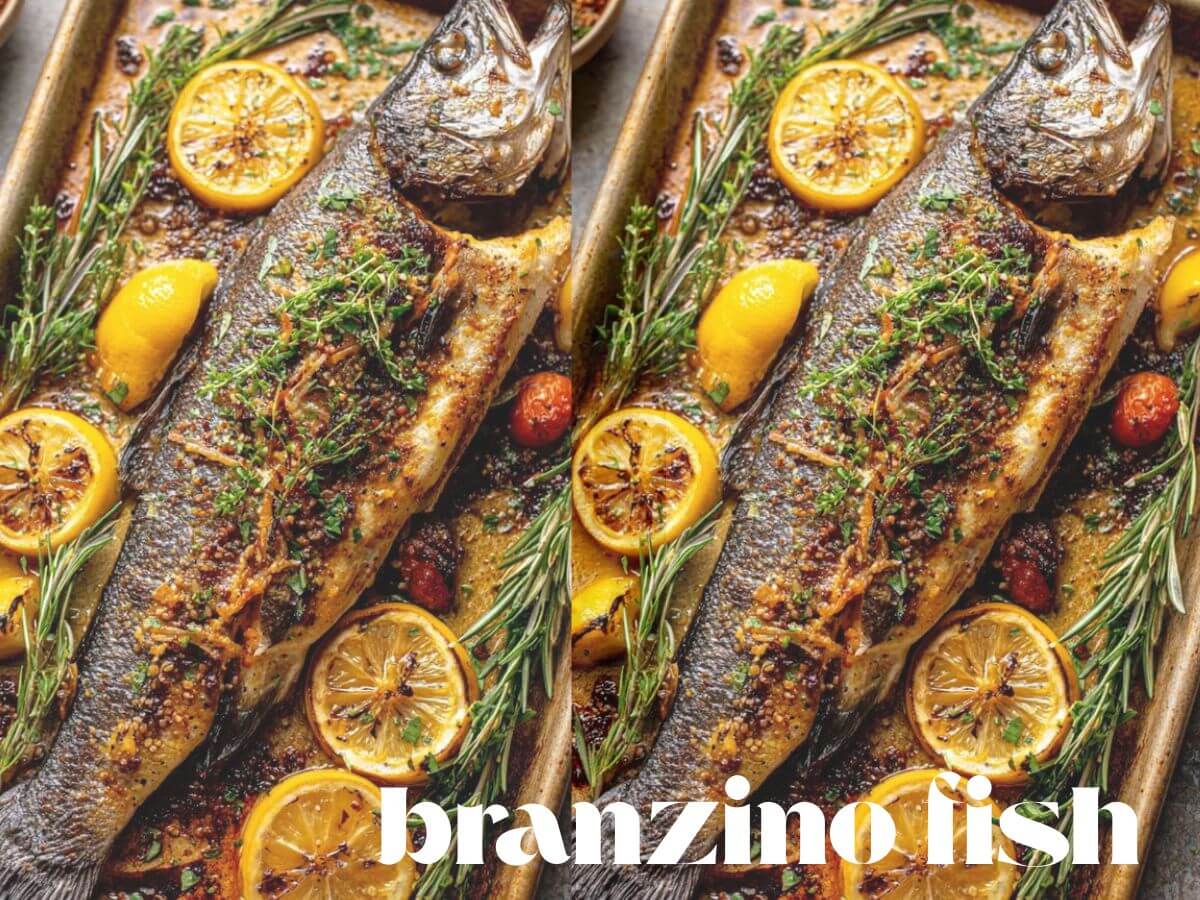
If you have spent any time around Mediterranean food or visited a decent seafood restaurant in the last decade, you have probably seen branzino on the menu. It shows up roasted whole with herbs, grilled over open flame, or pan-seared with a squeeze of lemon and a drizzle of good olive oil. And every single time, it manages to look simple while tasting like something special.
But what exactly is branzino fish? Where does it come from? What does it taste like, and how do you cook it at home without ruining it? These are fair questions, and this guide answers all of them. Whether you are a home cook picking up a whole fish at the market for the first time, or just someone curious about what they ordered at dinner last Saturday, you are in the right place.
What Is Branzino Fish?
Branzino is a saltwater fish native to the Mediterranean Sea and parts of the eastern Atlantic Ocean. Its scientific name is Dicentrarchus labrax, and it belongs to the Moronidae family a group of fish that includes other popular species like striped bass.
In English, branzino fish is most commonly called European sea bass. The name ‘branzino’ is Italian in origin and is the term most widely used in Italian cooking and on restaurant menus across the United States. In French, branzino fish is called bar or loup de mer which translates beautifully as ‘wolf of the sea,’ a nod to its reputation as an aggressive and spirited predator in the wild.
Other names you might see include lubina (Spanish), levrek (Turkish), and robalo (Portuguese). But in most of the English-speaking food world, branzino has become the go-to term, largely because Italian-American restaurants popularised it so effectively.
Where Is Branzino Fish Caught?
Wild branzino is caught primarily in the Mediterranean Sea, the Black Sea, and along the Atlantic coast from Norway down to Senegal. It thrives in coastal waters, estuaries, and river mouths places where saltwater and freshwater mix. The fish is highly adaptable and can survive in a wide range of salinities, which is one of the reasons it has been so successfully farmed.
Today, the vast majority of branzino sold in restaurants and supermarkets is farmed rather than wild-caught. Countries like Greece, Turkey, Italy, Spain, and Croatia are the leading producers of farmed branzino, with Greek and Turkish fish dominating the global export market. Farmed branzino is raised in sea cages in coastal waters, fed on a controlled diet, and harvested at around 300–500 grams the ideal size for whole-fish cooking.
Wild branzino does still exist and is considered the more premium product, with a slightly firmer texture and more complex flavour. If you are lucky enough to find it, it is worth the extra cost. But well-farmed branzino from reputable producers is genuinely excellent and makes for a very satisfying meal.
What Does Branzino Fish Taste Like?
Branzino fish taste is one of the main reasons it has become so popular. It is mild, clean, and delicately sweet never fishy, never overwhelming. The flesh is white, fine-textured, and moist when properly cooked, with a subtle brininess that hints at the sea without beating you over the head with it.
Compared to salmon, it is much lighter and less oily. Compared to tilapia, it has far more flavor and character. It sits somewhere between sea bream and striped bass elegant and versatile enough to carry bold flavors like capers, olives, and preserved lemon, but refined enough to shine with nothing more than salt, olive oil, and a few sprigs of fresh thyme.
Because of its mild flavour, branzino is also a fantastic fish for people who are not typically big fish eaters. It does not have the strong, polarising flavour of mackerel or sardines. It is accessible, crowd-pleasing, and genuinely delicious when handled well.
Branzino Fish Recipe Overview
There are many ways to cook branzino, but the most loved and most forgiving method is whole roasting in the oven with herbs and lemon. It is the branzino recipe you will find in every trattoria from Naples to New York, and for good reason, it highlights everything that makes this fish wonderful without requiring any complicated technique.
The recipe below serves two people and can be scaled up easily. It requires nothing fancy, just good fish, good oil, and a hot oven.
| Detail | Info |
| Prep Time | 15 minutes |
| Cook Time | 20–25 minutes |
| Total Time | ~40 minutes |
| Servings | 2 people |
| Difficulty Level | Easy |
| Cooking Method | Oven roasting (whole fish) |
| Cuisine | Mediterranean / Italian |
Ingredients
For the Fish
- 2 whole branzino fish, cleaned and scaled (about 400–500g each)
- 3 tablespoons extra-virgin olive oil
- 1 teaspoon fine sea salt
- Half a teaspoon freshly ground black pepper
- 1 lemon, thinly sliced
- 4–5 sprigs of fresh thyme
- 4–5 sprigs of fresh rosemary
- 3–4 garlic cloves, lightly crushed with the flat of a knife
- A small bunch of fresh flat-leaf parsley
For the Pan
- 1 tablespoon olive oil for greasing the tray
- Half a cup of dry white wine (optional but excellent)
- 1 lemon, cut into wedges for serving
Optional Add-Ons
- Cherry tomatoes, halved scatter around the fish for a sweet, roasted element
- Capers a small handful added inside the cavity gives a lovely briny punch
- Fennel fronds traditional in Italian branzino recipes and pairs beautifully with the delicate flesh
- Chilli flakes a small pinch in the cavity adds gentle warmth without overpowering the fish
Step-by-Step Method
Prepare the Fish
- Remove the branzino from the refrigerator about 20 minutes before cooking. Cooking fish straight from cold means the outside dries out before the inside is done.
- Pat the fish completely dry with paper towels, inside and out. This is not optional moisture is the enemy of a good golden skin.
- Score the skin on both sides with 3–4 diagonal cuts, cutting down to but not through the backbone. This helps the fish cook evenly and allows the flavours from the marinade to penetrate.
- Rub the fish all over, inside and out, with olive oil, salt, and pepper.
- Stuff the cavity of each fish generously with lemon slices, garlic, thyme, rosemary, and parsley. Do not be shy you want the cavity well-filled.
Roast the Fish
- Preheat your oven to 220°C (430°F). A high temperature is important for crispy skin.
- Lightly grease a roasting tray or baking sheet with olive oil. If you have a rack, place it in the tray and put the fish on the rack this allows heat to circulate under the fish.
- Lay the stuffed branzino on the tray. If using white wine, pour it into the bottom of the tray (not over the fish you want the skin dry).
- Roast for 20–25 minutes depending on the size of the fish. A 400g fish will be done in 20 minutes; a 500g fish needs closer to 25. The skin should be golden and blistered, and the flesh should flake easily when pressed near the thickest part with a fork.
- Do not flip the fish halfway through, branzino is delicate and does not need it.
Rest and Serve
- Remove the fish from the oven and let it rest on the tray for 3–4 minutes. This short resting period allows the juices to redistribute through the flesh.
- Transfer carefully to a serving plate. Branzino breaks apart easily when hot, so use a wide spatula and gentle hands.
- Squeeze fresh lemon juice over the top just before serving and add a final drizzle of good extra-virgin olive oil.
- To fillet at the table, run a knife along the backbone from head to tail, then lift the top fillet away. Remove the backbone and lift the bottom fillet. Discard the head and tail or keep them for stock.
Serving and Storage Temperature Guide
Serving Temperature
Branzino should always be served hot, ideally straight from the oven. The optimal serving temperature for cooked branzino is 63°C (145°F) internally this is both the USDA safe minimum for fish and the point at which the flesh is perfectly cooked through without being dry.
If you are plating multiple dishes and need to hold the fish briefly, keep it in the oven at 80°C (175°F) with foil loosely draped over it. Any longer than 10 minutes at holding temperature and the flesh will begin to dry out.
Storage Guide
| Storage Method | Duration | Notes |
| Refrigerator (cooked) | Up to 2 days | Airtight container; reheat gently |
| Refrigerator (raw, whole) | 1–2 days | Keep on ice; use as soon as possible |
| Freezer (raw, whole) | Up to 3 months | Wrap tightly in cling film and foil |
| Freezer (cooked) | Up to 1 month | Texture degrades; not recommended |
To reheat cooked branzino, place it in an oven preheated to 150°C (300°F) for 8–10 minutes, covered loosely with foil. Avoid microwaving if possible, it makes the flesh rubbery and intensifies any fishy smell. If you must use a microwave, heat in 30-second bursts on medium power.
Branzino Fish Nutrition
Branzino fish nutrition is one of its most compelling selling points. It is a lean, high-protein fish that is rich in heart-healthy omega-3 fatty acids, B vitamins, and several important minerals. Here is what a standard 150g serving of cooked branzino provides:
| Nutrient | Per 150g Serving (Cooked) |
| Calories | 165 kcal |
| Protein | 28g |
| Total Fat | 5g |
| Saturated Fat | 1.2g |
| Omega-3 Fatty Acids | 900–1200mg |
| Carbohydrates | 0g |
| Sodium | 115mg |
| Potassium | 480mg |
| Vitamin B12 | ~60% of daily value |
| Vitamin D | ~25% of daily value |
| Selenium | ~55% of daily value |
Branzino is an excellent source of lean protein, making it a great option for those watching their caloric intake while still wanting satisfying, nutrient-dense meals. Its omega-3 content supports heart health, brain function, and inflammation reduction. The high selenium content is also worth noting, selenium is a powerful antioxidant that supports thyroid health and immune function.
Because it is relatively low in mercury compared to larger predatory fish like tuna or swordfish, branzino is considered safe for regular consumption, including for pregnant women and young children (following standard guidance from your healthcare provider).
Alternative Ingredients and Techniques
Alternative Fish
If you cannot find branzino fish near you or it is outside your budget, these fish share similar flavour profiles and work beautifully with the same recipe:
- Sea bream (dorade): the most similar in flavour and texture; almost interchangeable with branzino.
- Red snapper: slightly firmer and more flavorful, but takes the same cooking approach well.
- Striped bass: a bit meatier, excellent for grilling rather than roasting.
- Black sea bass: mild, sweet, and available on the East Coast of the US; a great substitute.
- Trout: especially rainbow trout for whole roasting; different flavor but the same technique applies perfectly.
Alternative Cooking Methods
Grilled Branzino
Grilling over charcoal or a hot gas grill is arguably the best way to cook branzino. The direct heat creates an incredible smoky char on the skin while keeping the flesh inside juicy. Brush the fish generously with olive oil, season well, and grill for 5–6 minutes per side over direct high heat. The scoring you make in the skin is especially important for grilling it prevents the skin from curling and allows the heat to reach the flesh faster.
Salt-Crusted Branzino
This is a showstopper of a technique and incredibly simple. Mix 2kg of coarse rock salt with 2 egg whites and enough water to make a thick paste. Pack the mixture around the entire fish (stuffed with herbs inside) to form a solid crust. Bake at 200°C for 25 minutes. Crack the crust open at the table the fish inside will be perfectly steamed in its own juices, incredibly moist, and beautifully seasoned.
Pan-Seared Branzino Fillets
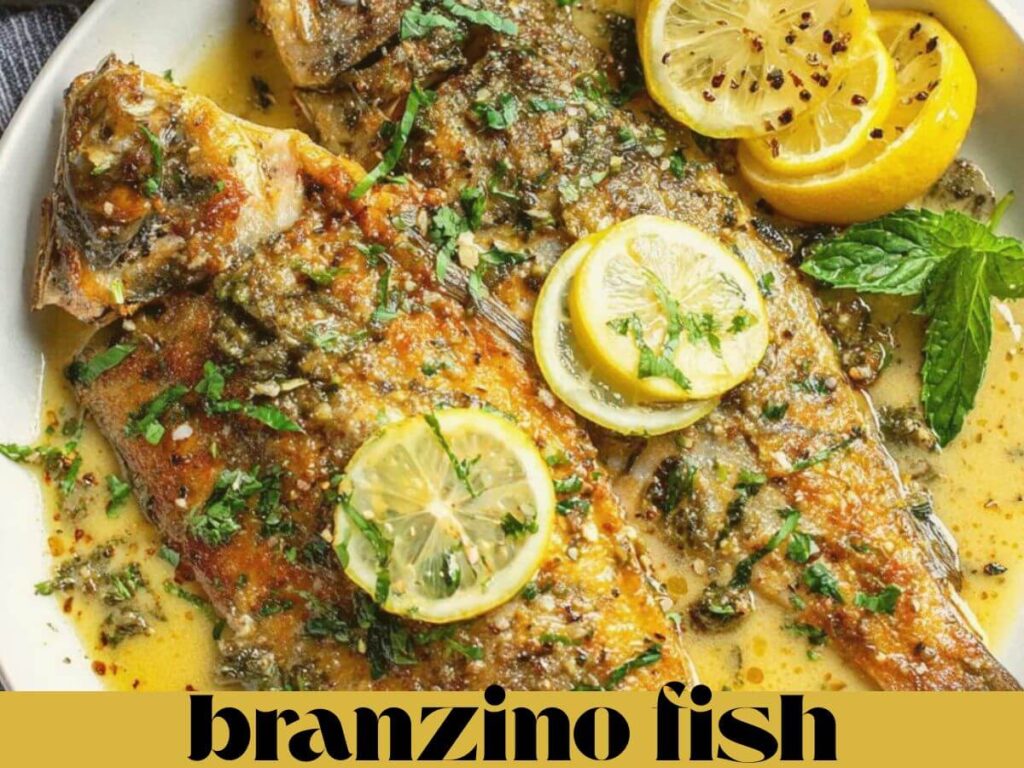
For a quicker weeknight version, pan-searing branzino fillets is your best friend. Heat a heavy pan (cast iron works best) until smoking hot, add a splash of olive oil, and lay the fillets skin-side down. Press gently with a spatula for the first 30 seconds to prevent the skin from curling. Cook for 4 minutes on the skin side, then flip and cook for just 1 minute more. The result is crackling crispy skin and perfectly cooked, silky flesh.
Alternative Herb and Flavour Combinations
- Asian-inspired: Replace the Mediterranean herbs with ginger, spring onions, and sesame oil. Steam the fish over soy sauce and rice wine for a completely different but equally delicious result.
- North African: Rub the fish with chermoula a paste of coriander, cumin, paprika, garlic, and lemon before roasting. Serve with couscous and harissa yogurt.
- French: Stuff the cavity with tarragon and shallots, deglaze the roasting pan with vermouth, and finish with cold butter whisked in for a quick pan sauce this is essentially branzino fish in the French style, loup de mer au beurre blanc.
Tips and Tricks for Perfect Branzino Every Time
- Ask your fishmonger to do the hard work. When buying whole branzino, ask for it to be scaled, gutted, and cleaned. There is no reason to do this yourself at home, and a good fishmonger will do it in under a minute.
- Dry the skin obsessively. Wet skin does not crisp it steams. Whether you are roasting, grilling, or pan-searing, getting the skin as dry as possible before it hits the heat is the single most important step for texture.
- Do not overcook it. Branzino is a forgiving fish but not an invincible one. It goes from perfect to dry in a matter of minutes. Use a thermometer if you are unsure 63°C in the thickest part of the flesh and you are done.
- Season inside the cavity generously. The flesh of a whole fish is protected by skin on both sides. Salt and seasoning you put inside the cavity actually reach the flesh more directly than what goes on the skin, so do not hold back.
- Use high-quality olive oil. Branzino is mild enough that the flavor of the oil actually comes through. This is not the place for a cheap blended oil use something you would happily dip bread into.
- Let the fish come to room temperature before cooking. Cold fish placed in a hot oven cooks unevenly. Give it 15–20 minutes on the counter beforehand.
- Pair it with something acidic. Branzino loves acidity. A squeeze of lemon, a splash of white wine, a handful of capers, or a drizzle of good vinegar all do wonderful things to the final dish.
Frequently Asked Questions (FAQs)
Is branzino fish healthy?
Yes, very. Branzino is low in calories and saturated fat, high in lean protein, and rich in omega-3 fatty acids, vitamin B12, vitamin D, and selenium. It is one of the healthiest white fish you can eat and is considered safe for regular consumption. Its relatively low mercury levels also make it a safer choice than many other popular fish.
What is branzino fish called in English?
In English, branzino fish is called European sea bass. You might also see it labelled as Mediterranean sea bass or simply sea bass at fish counters and grocery stores. The name branzino is Italian and has been widely adopted in American restaurant culture, which is why most people know it by that name even in English-speaking countries.
What is branzino fish called in French?
In French, branzino fish is called bar or, more poetically, loup de mer meaning ‘wolf of the sea.’ The latter name is used in southern France and along the Mediterranean coast and refers to the fish’s aggressive hunting behavior in the wild. On French menus, you will almost always see it as loup de mer, particularly in Provencal and Nicoise cuisine.
How do I know when branzino is fully cooked?
The most reliable way is to use an instant-read thermometer inserted into the thickest part of the flesh. When it reads 63°C (145°F), the fish is done. Without a thermometer, you can check by pressing the flesh near the backbone with a for, if it flakes easily and is no longer translucent, it is cooked through. For whole roasted branzino, the eye of the fish also turns from clear to white when the fish is cooked, which is a useful visual cue.
Does branzino have a lot of bones?
Branzino has a central backbone and rib bones, but once you remove the main backbone the fillets are relatively clean and pin-bone free compared to fish like salmon or trout. If you are uncomfortable filleting a whole fish at the table, ask your fishmonger to butterfly it before cooking the backbone can then be removed in one easy motion after roasting, leaving clean, boneless portions.
Can I cook branzino from frozen?
It is best to thaw branzino fully before cooking. Cooking from frozen gives an uneven result the outside overcooks before the inside reaches temperature. Thaw overnight in the refrigerator, or place the sealed bag in cold water for 1–2 hours if you are short on time. Never thaw fish at room temperature as this creates conditions for bacterial growth.
Where can I find branzino fish near me?
Branzino is increasingly available at larger supermarkets, particularly those with a dedicated seafood counter. Whole Foods, Trader Joe’s, Costco (seasonal), and most independent fishmongers will carry it fresh or frozen. If you are struggling to find it locally, several reputable online seafood retailers ship fresh, overnight-packed branzino directly to your home. Searching ‘fresh branzino fish near me’ or ‘branzino fish recipes near me’ on Google Maps often pulls up fish markets and Mediterranean grocery stores in your area.
Conclusion
Branzino fish has earned its reputation as one of the finest everyday fish in Mediterranean cooking, and it is not hard to see why. It is mild without being boring, lean without being dry, and elegant enough for a dinner party but simple enough for a Tuesday night. Once you cook it whole for the first time sliding it out of the oven all golden-skinned and fragrant with herbs and lemon you will wonder why you ever bothered with complicated recipes.
The key takeaways from this guide: buy it as fresh as you can, dry the skin before cooking, keep the seasoning honest and Mediterranean, and do not walk away from the oven. Branzino rewards attention and punishes neglect, but it is never difficult if you stay close.
Whether you are roasting it whole, grilling it over coals, or pan-searing fillets for a quick weeknight meal, branzino fish is one of those ingredients that consistently delivers more than it asks of you. Give it a try it might just become your new favourite fish.